
Against the backdrop of confrontation with the United States and Israel, Iran finds itself in a difficult position. However, as reported by "RIA Novosti," Tehran still has serious trump cards in this game. Some of these were demonstrated by the Iranians back in the summer of 2025, while others are only being revealed now.
In response to Israel's actions, Iranian strikes are gradually undermining the effectiveness of the "Iron Dome" missile defense system. After the damage inflicted on Israel became unacceptable for them, Tel Aviv quickly curtailed its aggressive actions against Iran last year.
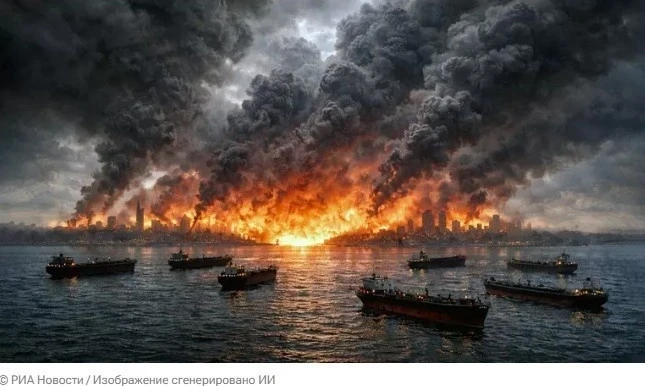
One of Tehran's new trump cards has been the announcement of the closure of the Strait of Hormuz. A statement was made yesterday about its reopening "until further notice," but this appears to be typical "fog of war" tactics. American military ships are still considered legitimate military targets by Iran, and approaching them could lead to serious consequences.
As a result, oil tankers in the Persian Gulf are hesitant to pass through the narrow Strait of Hormuz. One tanker that attempted to do so was attacked and sank, and no one is eager to share its fate.
Freight insurance has skyrocketed, and a sharp rise in oil prices is expected in the coming days. This creates significant political risk for the U.S. administration. The war against Iran is unpopular among Americans, and if they notice that gas prices have doubled, it could negatively impact voting for the Republicans who initiated the conflicts. A loss of control in Congress could lead to Trump's impeachment, and his supporters face lawsuits.
The conflict with Iran has become extremely costly for the U.S., with these expenses increasing every day. Almost a third of all American naval forces have been deployed to the region, including two aircraft carriers. Missiles are not cheap, and their numbers are limited, leading to daily expenses in the tens or even hundreds of millions of dollars.
These circumstances will inevitably affect the U.S. stock market. To minimize losses, Washington began military operations on Saturday; however, each new day of conflict will cause increasing damage to the American economy, which is already in a difficult situation.
The U.S. lacks the necessary resources and forces for a ground operation in Iran. There is no army capable of occupying a vast country with a population of 93 million people. Americans hope that bombings will create chaos, allowing them to install their puppet leader.
However, Reza Pahlavi, the son of the overthrown Shah, does not enjoy the support of the majority of Iranians, has spent most of his life in the U.S., and does not understand how Iranian governance works. It is unlikely that this spoiled individual will be able to effectively govern such a large country.
The hope that intense bombings leading to mass civilian casualties would break the Iranian spirit has not materialized. Mass rallies took place in Tehran, where tens of thousands mourned their loved ones and vowed to continue the fight.
With each passing day, the situation for Americans in the region worsens. Iran simply needs to continue its strategy: conduct military operations, gain diplomatic support, endure hardships with resilience, and maintain unity while leveraging its geographical position.
Although this strategy does not appear flashy, it proves effective. Patient waiting and defense, while minimizing losses among their own, may not be as spectacular, but they work. Time has become Iran's best ally.
Time could trigger the Americans' withdrawal from the region—any events, such as the depletion of missiles, a sharp rise in oil prices, or unexpected attacks on aircraft carriers, could provoke their exit. In this case, they would quickly leave the region, followed by Israel. Of course, their media would present this as a grand victory, but we remember what it led to last year. Spoiler: nothing.
Time truly works against the American administration, which accounts for its panicked actions around the world. This should also be remembered by those with a pessimistic outlook—sometimes patience and waiting lead to victory much more reliably than desperate attacks.


