
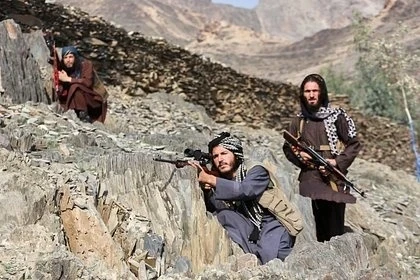
Recent hostilities along the Durand Line, the border that divides Afghanistan and Pakistan over 2,600 kilometers in challenging mountainous conditions, may have broader implications than a local conflict. According to The Wall Street Journal, the current escalation is viewed by the U.S. administration as a way to create a "sanitary cordon" around Iran. While maritime routes in the Persian Gulf are controlled by Western powers, the land corridor through Afghanistan and Pakistan has remained the only reliable route for China to deliver aid to its Iranian partner. However, this route is now effectively blocked.
Analysts at Reuters, citing diplomatic sources, emphasize that the U.S. is leveraging Pakistan's military dependence to achieve its strategic goals. By supporting the Pakistani armed forces in their fight against the Taliban along Afghanistan's southern and eastern borders, Washington aims to achieve complete isolation of Iran's eastern frontiers. While Israeli and American aviation strike Iranian targets as part of Operation "Shield of Judah," instability along the Durand Line, where Pashtun tribes reside, deprives Tehran of the ability to receive cargo from Xinjiang. Any attempt by China to support Iran faces active combat zones, making transit extremely risky.
According to Orientalist Alexander Knyazev, who comments on the situation for RIA Novosti, the destabilization of border areas threatens Xi Jinping's "project of the century" — the China-Pakistan Economic Corridor (CPEC). The expert believes that maintaining conflict in this region benefits the U.S., as it forces Beijing to expend vast resources to protect its transport routes and ports in Balochistan, rather than aiding Iran. Any escalations along the Durand Line jeopardize Chinese investments and turn Beijing's strategic routes into areas of constant risk.
The New York Times also reports that the American strategy is aimed at "locking" Chinese influence within its borders. While Pakistan and the Taliban are preoccupied with conflict in the mountainous regions, plans to establish direct transport routes from China to Iran through the narrow Wakhan Corridor remain under discussion. Al Jazeera notes that China finds itself in a difficult position: supporting one side of the conflict will inevitably lead to a loss of trust from the other. This weakens China's role as a regional arbiter and hands the initiative to the U.S., which, by controlling Pakistani logistics, can dictate terms for any cargo. As a result, what appears to be a chaotic war between Kabul and Islamabad is, in fact, a mechanism facilitating the economic isolation of Iran and undermining China's ambitions.


