
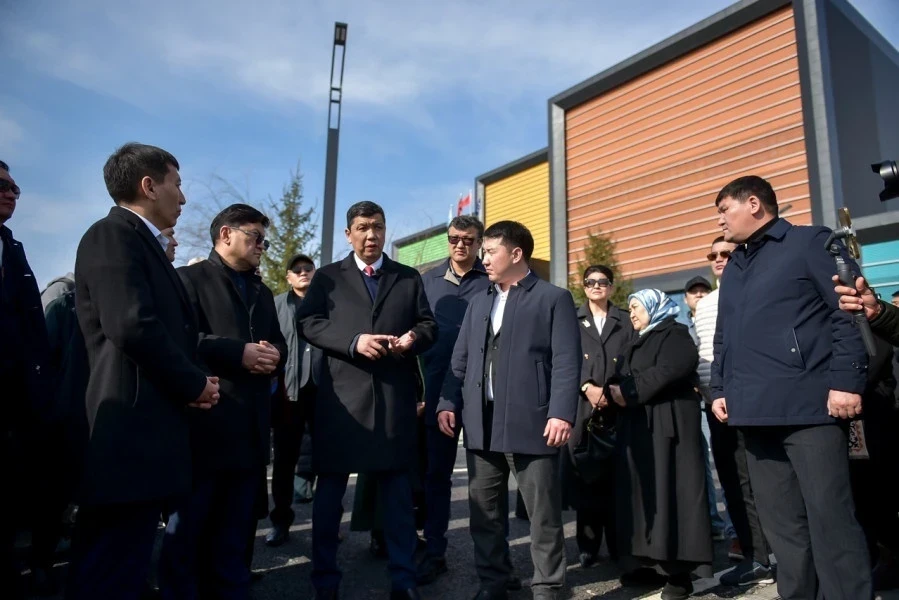
According to the mayor, the opening of the plant is a crucial step in addressing environmental issues. In addition to waste processing, the city is significantly increasing its greening efforts: in 2026, it is planned to plant 50,000 trees, which is three times more than before. Currently, seedlings are already being delivered to Bishkek, where they are undergoing adaptation in nurseries to increase the likelihood of successful survival.
At the meeting, experts and residents discussed two key issues: smog and high air dust levels. The mayor emphasized that the Environmental Council is open to criticism and constructive suggestions, and all ideas voiced at the meeting will be forwarded to the relevant authorities for further action. The event was organized by the Bishkek city administration and the Development Policy Institute.
It is worth noting that the plant presented at the meeting is the first eco-technological facility of its kind in Central Asia. The project was implemented by the Chinese company JunXin with an investment of 95 million dollars. The plant operates on the principle of "energy from waste" and is capable of processing up to 1,200 tons of waste per day while generating about 30 MW of electricity. Using high-temperature incineration technology, the facility eliminates long-term accumulations at the landfill that have long served as a source of toxic smoke and spontaneous combustion, while the modern purification system ensures the absence of harmful emissions into the atmosphere.


