
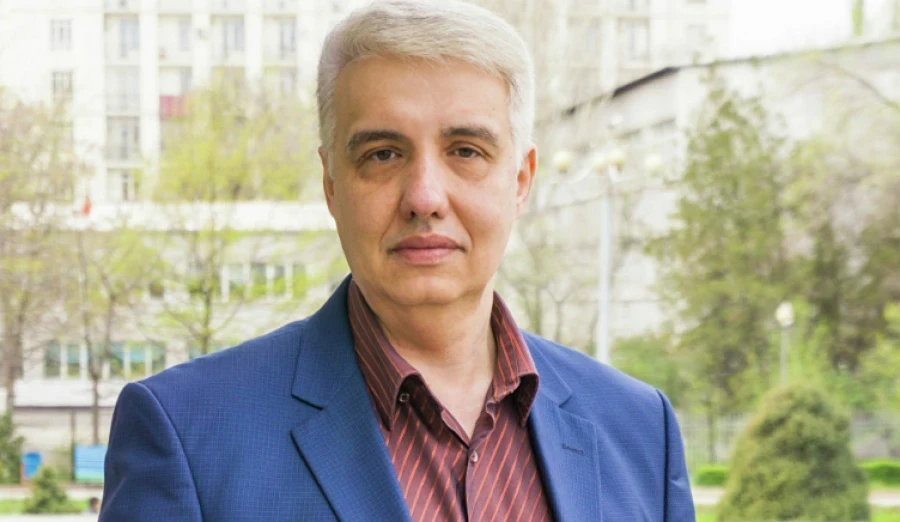
An expert discussed the significance of Astana's foreign policy initiatives for Central Asia and the Middle East
Recent actions by Kazakhstan in the realm of international politics, especially in the context of the conflict in the Middle East, have drawn the attention of the entire region. In the face of prolonged crises and the weakening of traditional global institutions, Astana is demonstrating a willingness to create new platforms for dialogue that go beyond traditional diplomacy.
Key steps have included Kazakhstan's joining the Abraham Accords and participation in the Council for Peace — an initiative designed as a mechanism to stabilize the situation in Gaza and the Middle East as a whole. These actions are of interest not only to international players but also to Central Asian countries, where Kazakhstan's foreign policy course is becoming an important reference point.
Political scientist Igor Shestakov noted in a comment for Vesti.kg that Kazakhstan has become the first post-Soviet state to participate in the Abraham Accords. This step, in his opinion, underscores the independence and multi-vector nature of Astana's foreign policy.
It is also interesting that Kazakhstan is participating in the Council for Peace, created with the support of U.S. President Donald Trump. Shestakov believes that this structure is intended not only to respond to the crisis in Gaza but also to create a broader international agenda aimed at the practical resolution of conflicts.
Particular mention should be made of President Kassym-Jomart Tokayev's experience in diplomacy. It is difficult to find a leader in the post-Soviet space with such a level of experience in key foreign policy issues. This aspect explains Astana's cautious steps in such a sensitive region as the Middle East, according to Shestakov.
Kazakhstan not only possesses diplomatic tools but also has practical experience in peacekeeping activities. In recent years, Kazakh peacekeepers have participated in UN missions in various Middle Eastern countries, such as Syria, and have carried out tasks in Libya. This is becoming a foundation for forming Astana's reputation as a state ready not only to initiate dialogue but also to implement it in practice.
For Kyrgyzstan and other Central Asian countries, these events have practical significance. The region is actively developing economic and political ties with the Middle East, including investments, infrastructure projects, and security issues. Kazakhstan can serve as a model for interaction for other countries in the region due to its new international initiatives.
Shestakov also noted that Astana's activity in international politics is linked to President Tokayev's broader position on the need to reform the UN. The crises of recent years have shown that the decisions of this organization are increasingly declarative and do not lead to real changes in conflict zones.
Thus, Kazakhstan seeks not to replace existing international institutions but to complement them with more flexible and pragmatic mechanisms, which may be particularly in demand for Central Asian countries, including Kyrgyzstan, in the context of instability on the international stage and growing regional risks.
Photo www


