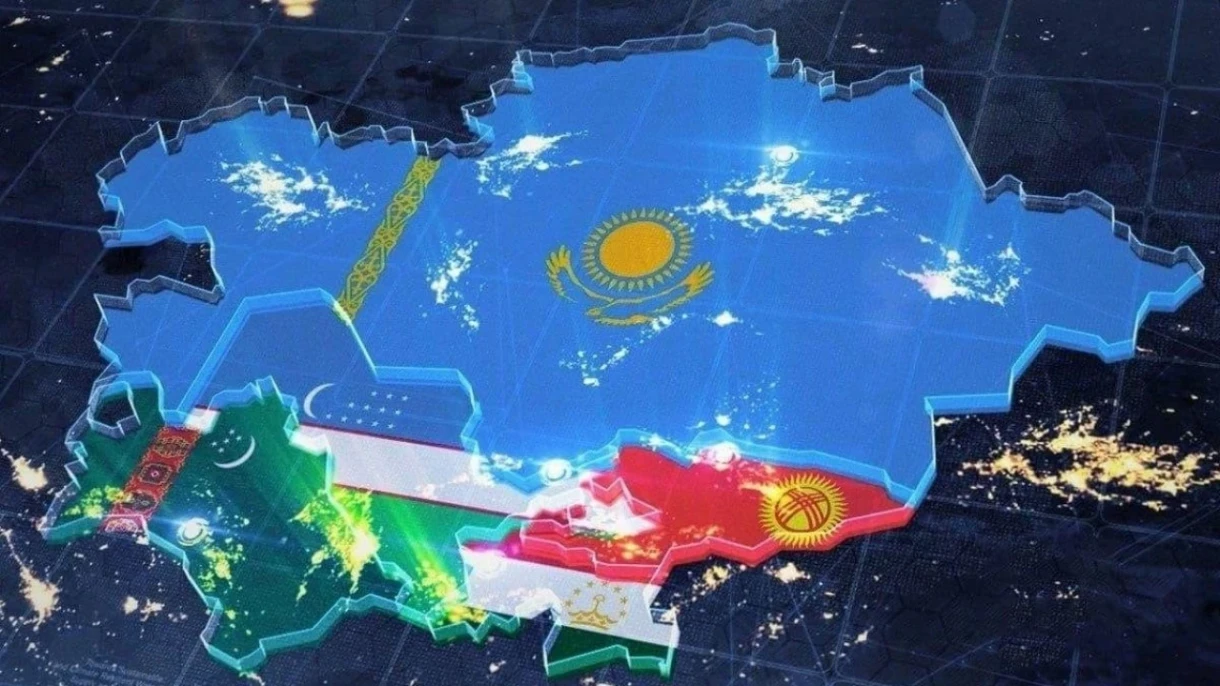
Central Asian countries are faced with a choice: to become part of a transparent logistics network between China and Europe or to act as intermediaries circumventing sanctions.
The tightening of sanctions against Russia's financial system and the development of the Middle Corridor are radically changing the economic landscape of the region. For Central Asian countries, this is not just a matter of diplomatic approach, but a necessity to choose between two models: integration into honest logistics between China and Europe or becoming a gray transit hub, which could have serious consequences.
The inclusion of Russia in the EU's list of high-risk money laundering jurisdictions implies stricter control over all transactions related to Russia. Against this backdrop, the statement by the President of Kazakhstan regarding opaque transit operations amounting to $14 billion through one of the banks becomes part of a broader issue. He noted that this concerns not only commodity flows but also complex financial schemes disguised as "internal regulation."
Kazakhstan, possessing the largest economy in the region, has long been perceived as a natural financial hub for this corridor. However, in reality, the country is facing increasing dependencies in the energy, logistics, digital, and financial sectors. The vulnerability of internet traffic, control over oil transit, and the import of petroleum products from Russia create long-term risks.
A vivid example is the regulation of the gambling and betting sector. In Kazakhstan, under the pretext of "transparency" and combating the shadow economy, a unified betting accounting system (UBAS) was implemented. According to Agents.Media, a company linked to Umar Kremlov was awarded the contract for its implementation. It was accused of allowing its associates to control financial flows in the betting sector.
Deputy of the Mazhilis Bakytzhan Bazarbek expressed concern, claiming that the new regulation conceals the transfer of control over financial flows and data to a private company associated with Russian interests. Despite these warnings, the system was implemented, and the risks of secondary sanctions fell on Kazakh banks servicing this market.
In Kyrgyzstan, the situation developed differently. The country faced attempts to implement Russian financial and digital solutions, but in several cases chose an alternative path. The integration of structures related to VTB and Russian regulators was not supported. The case of "Alpha Telecom" also ended with the nationalization of the operator, thanks to arguments about security and public discussions in the Jogorku Kenesh, despite pressure from external players.
Nevertheless, Kyrgyzstan also did not escape problems. Sanctions against "Keremet Bank," restrictions on Capital Bank, and questions regarding crypto networks negatively impacted the country's reputation. However, these difficulties became a catalyst for revising financial policy. Banks began to monitor compliance more strictly, checking not only formal counterparties but also ultimate beneficiaries, based on OFAC standards and European regulators.
Currently, Europe signals that the Middle Corridor is not just a route for cargo but a new financial ecosystem where there is no place for schemes servicing sanctioned economies. Therefore, countries that continue to use Russian financial mechanisms may find themselves outside the new continental project.
Kyrgyzstan is now caught between two worlds— the past and the future. Nevertheless, the lack of deep integration with Russian sanctioned structures opens the opportunity to become not a gray zone but part of a new architecture of trust.