
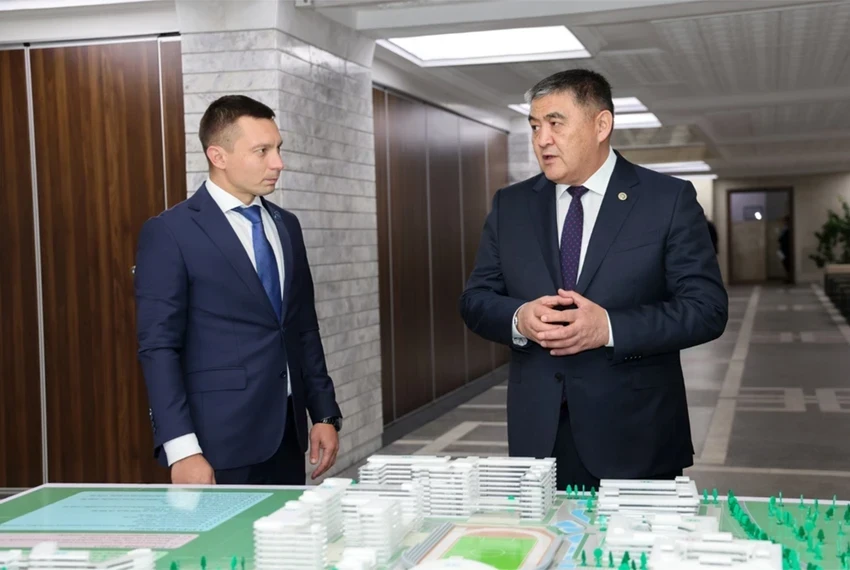
Kamchybek Tashiev emphasized: “We are witnessing how the university is transforming. There is active modernization of infrastructure, new educational programs are being developed in accordance with the needs of the economy, and new opportunities are being created for students, teachers, and researchers. This process confirms that KRSU remains an important strategic project for both countries. Joint efforts make a significant contribution not only to education but also to the future of our states.”
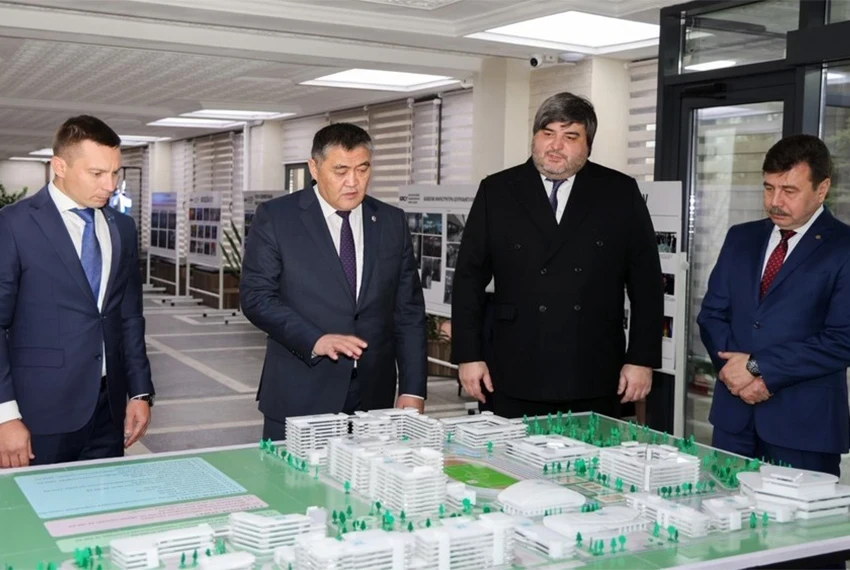
During the meeting, the results of 2025 were summarized, and key tasks for 2026 were defined. The rector of KRSU, Sergey Volkov, presented a report on the university's work in the educational, scientific, and infrastructural spheres, including plans for campus development, opening branches, and supporting student initiatives.
“The Board of Trustees positively assessed the report for the last seven months. During this period, we managed to attract over 60 million soms from the trustees — these funds are for the creation of three named classrooms, named scholarships from companies, and contributions to the endowment fund. In addition, the company 'Bishkek Solar' contributed an additional 10 million, and 'Orion' — 5 million. Now the total amount of the endowment fund is 18.5 million soms. This is a small amount, but it is real support for development,” noted Sergey Volkov.
He added that a decision was made to further strengthen support for the university's sports teams, continue creating named scholarships, and modernize infrastructure, including updating the vehicle fleet. “Proposals were provided to each member of the Board of Trustees, and we are currently in the process of working on them. The university is updating and developing, and we continue to move in the chosen direction,” said the rector.
KRSU has expanded its strategic partnerships by signing a memorandum of cooperation with 'Rosatom' for joint educational and engineering projects, including the development of a project office in the field of hydropower. Agreements have also been concluded with PJSC 'Kirov Plant' and specialized training centers to create a Russian-Kyrgyz Center for Vocational Training.
Roadmaps for cooperation with the Tax Service of the Kyrgyz Republic and 'Gazprom Kyrgyzstan' have been confirmed. The university also signed a memorandum with Wildberries to develop digital and entrepreneurial skills among students.
The decisions made solidify KRSU's transition to a long-term development model focused on the integration of education, science, and the real sector of the economy, which strengthens the university's status as one of the leading educational centers in the region.


