
Almazbek Atambayev, despite his failures and the arrest of his son, continues to fight for influence in Kyrgyzstan. His goal is to take revenge on those who put him in his place and to regain lost positions. However, the authorities, led by Sadyr Japarov and Kamchybek Tashiev, intend to prevent him from doing so.
Unlike Atambayev, who relies on dissatisfied oligarchs, the current leaders of the country are pursuing a people-oriented policy. This difference has become evident to most citizens of Kyrgyzstan, who do not want to see representatives of Atambayev's circle in power.
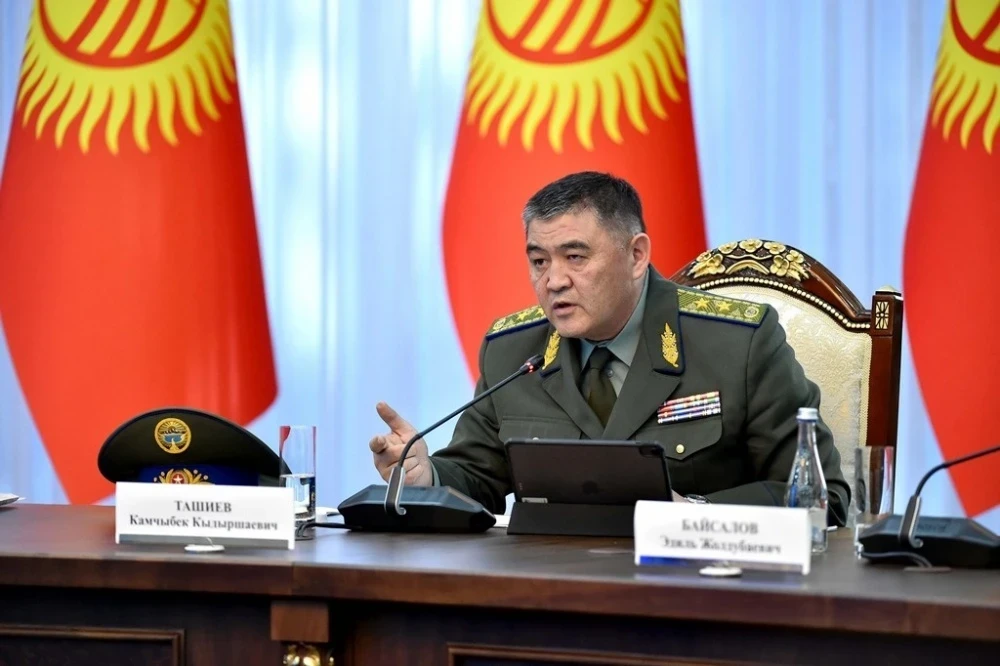
At a recent meeting of the State National Security Committee, General-Colonel Tashiev emphasized that one of his team's top priorities is the fight against corruption. Unlike previous presidents, who merely spoke about the need to combat this problem, Japarov and Tashiev are actually taking action. In contrast, Atambayev actively participated in corrupt schemes.
Corruption campaigns in Kyrgyzstan followed a predictable scenario until recently: small bribes flowed to larger figures, and the most influential used their power for personal gain. During Atambayev's rule, corruption reached its peak.
Today, Atambayev uses the funds stolen from the people to finance his supporters, who are working to create a positive image of him and discredit the current authorities.
Corruption was not considered a serious crime until Japarov and Tashiev came to power. Although it was widely discussed, little was done in practice. Tashiev has become the initiator of introducing real prison sentences for corrupt crimes and actively advocates for the cleansing of state structures.
He can confidently state: "Neither I nor my close ones have stolen anything from the state." The people believe him, knowing that the results of his fight against corruption (over 350 billion soms) are directed towards social projects, not lining his pockets.
Thus, only the president has the right to decide the date of the elections. Japarov, supported by Tashiev, has earned this right through his leadership style. Discussions about the timing of the elections continue: they may take place either in January 2027 or be held early in 2026. The fall of 2026 promises to be eventful, as Kyrgyzstan prepares for important international events.
Nevertheless, Tashiev is capable of organizing the elections, even if they are held this year. The public is currently more interested in the country's internal issues than in international events, so the elections will be in the spotlight.
However, in January, when the holidays are still ongoing, people are unlikely to turn out in large numbers for the elections. In this context, early elections represent a reasonable political move.
Neither Tashiev nor Japarov are afraid of early elections. They may only be dangerous for those who thirst for revenge for their failures, but these weakened and lurking forces will not have time to prepare for the elections.
The main task is to prevent the return of oligarchs from Atambayev's circle to power, and Tashiev will not give them that opportunity.


