
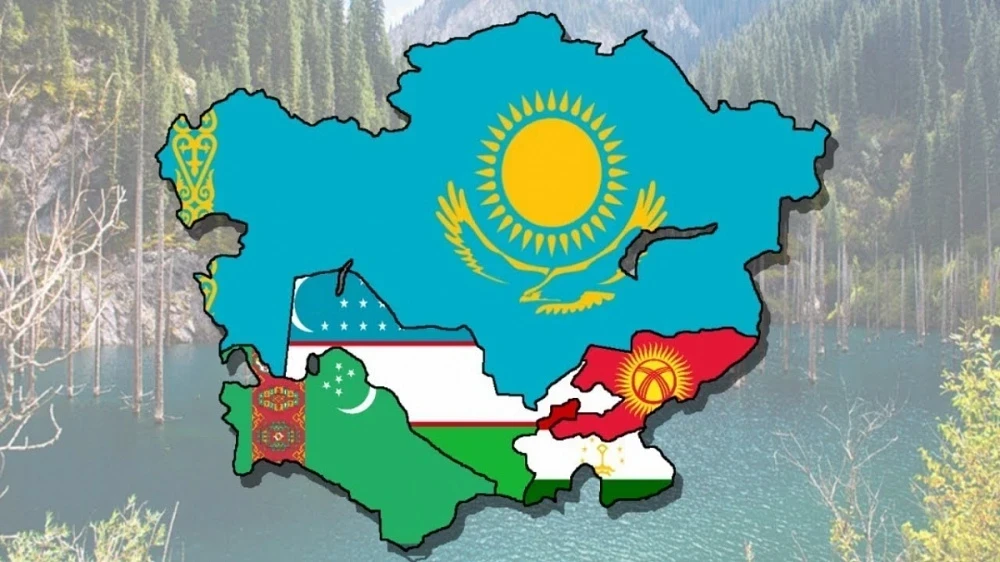
America is not the only country leaving Central Asia. As European analysts claim, the old system is collapsing before our eyes, while the new one has yet to take shape. If a new world order does emerge, it will be in the context of the chaos prevailing in the region. The countries of Central Asia, just like many in Europe, yearn for stability and face a difficult choice regarding the direction of their future actions.
Representatives of Kyrgyz NGOs, no matter how much they try to dispute it, must acknowledge: the lines of the anthem "God Bless America" have lost their relevance for us. Hopes for assistance from the United States seemed strong, but now it is clear – help will not come.
The U.S. tried to provide support, but only in those aspects that were beneficial to them. This occurred while the "Ganci" military base operated in Kyrgyzstan, and the influence of people like George Soros was significant. Now the base is closed, and the Kyrgyz authorities have created conditions that do not promote the development of pro-American NGOs. Funding that came from the U.S. to those dependent on Soros is gradually drying up. Small groups that remain free usually operate from abroad and receive support from other sources.
Despite this, U.S. interest in Central Asia and Kyrgyzstan still exists, although its influence has significantly weakened. Donald Trump is now more focused on global issues and is unlikely to be concerned about the situation in the European Union.
As Die Zeit notes, Trump's actions undermine international law, and the threat of using force against allies weakens NATO, which relies on trust and military power. As a result, no one believes that the U.S. will come to the rescue in a critical situation. This publication also points to the possibility of forming a new global alliance within the EU.
Currently, Trump sees Central Asia merely as a way to harm his main "partners" — Russia and China. Do we need this?
Thus, America under Donald Trump is playing a game whose goals are clear only to him. Russia is also going through tough times, challenging the unipolar world and dealing with its internal conflicts. Meanwhile, China is engaged in a trade war with the U.S. "Don't worry about China, everything will be fine!" Trump assures, although the history of American "aid" to many countries is well-known.
Against this backdrop, the states of the European Union initially froze in fear: "The U.S., China, and Russia will divide the world, leaving Europe aside," but soon realized that a strong alliance of democratic countries capable of resisting pressure might emerge.
What awaits Kyrgyzstan — a country caught between two powerful centers of power — Russia and China? Although we are not between a rock and a hard place, potential conflicts between these powers could negatively impact us.
We must not forget that we are not the U.S., and we cannot afford to ignore global problems, hoping only for our own strength. Expectations that "foreign aid will help" are also not justified. If help does come, it will be from our closest neighbors, with whom we share common interests and problems.
Among the challenges facing Kyrgyzstan are economic instability, water resource shortages, environmental issues, labor migration, disaster risks, and poverty. Additionally, threats emanating from Afghanistan remain relevant — extremism, drug trafficking, and other dangers can surface at the most inopportune moments.
The region has long suffered from border conflicts: Kyrgyzstan with Uzbekistan, Kyrgyzstan with Tajikistan, Uzbekistan with Tajikistan, Kazakhstan with Kyrgyzstan. Sometimes misunderstandings concerned only minor customs issues, while at other times they escalated into large-scale conflicts. Nevertheless, the head of the State National Security Committee of the Kyrgyz Republic, Kamchybek Tashiev, has achieved the resolution of border issues with Uzbekistan and Tajikistan, which has laid the groundwork for future cooperation.
Last autumn, at the Council of Commanders of Border Troops of the CIS, Colonel General Tashiev suggested the possibility of reducing border presence on the Kyrgyz-Tajik border. This does not mean that the borders between states will be erased, but it creates opportunities for uniting into a powerful bloc capable of countering threats both within the region and externally. Unification can occur not only with Tajikistan but also with other neighbors.
What alliances currently exist? Do they align with the interests of our region? The Shanghai Cooperation Organization (SCO) aims to strengthen trust and cooperation in the Eurasian space, but not all Central Asian countries are part of it.
The Collective Security Treaty Organization (CSTO) — a military-political alliance that united Kyrgyzstan, Kazakhstan, Tajikistan, Russia, Armenia, and Belarus in the 90s — today does not inspire serious confidence; it needs changes for further existence, and what to do with Uzbekistan and Turkmenistan, which are not part of the treaty?
The CIS and EAEU face similar problems.
It is evident that a new structure is needed that will unite the countries of Central Asia on the principles of equality and promote their joint development and security.
As Die Zeit notes, during the era of American dominance, Europeans felt helpless. Now Europe should believe in itself and abandon the habitual inferiority complex. Perhaps it is time for Central Asia to unite into a strong and influential alliance, which is now a matter of survival and development.


