
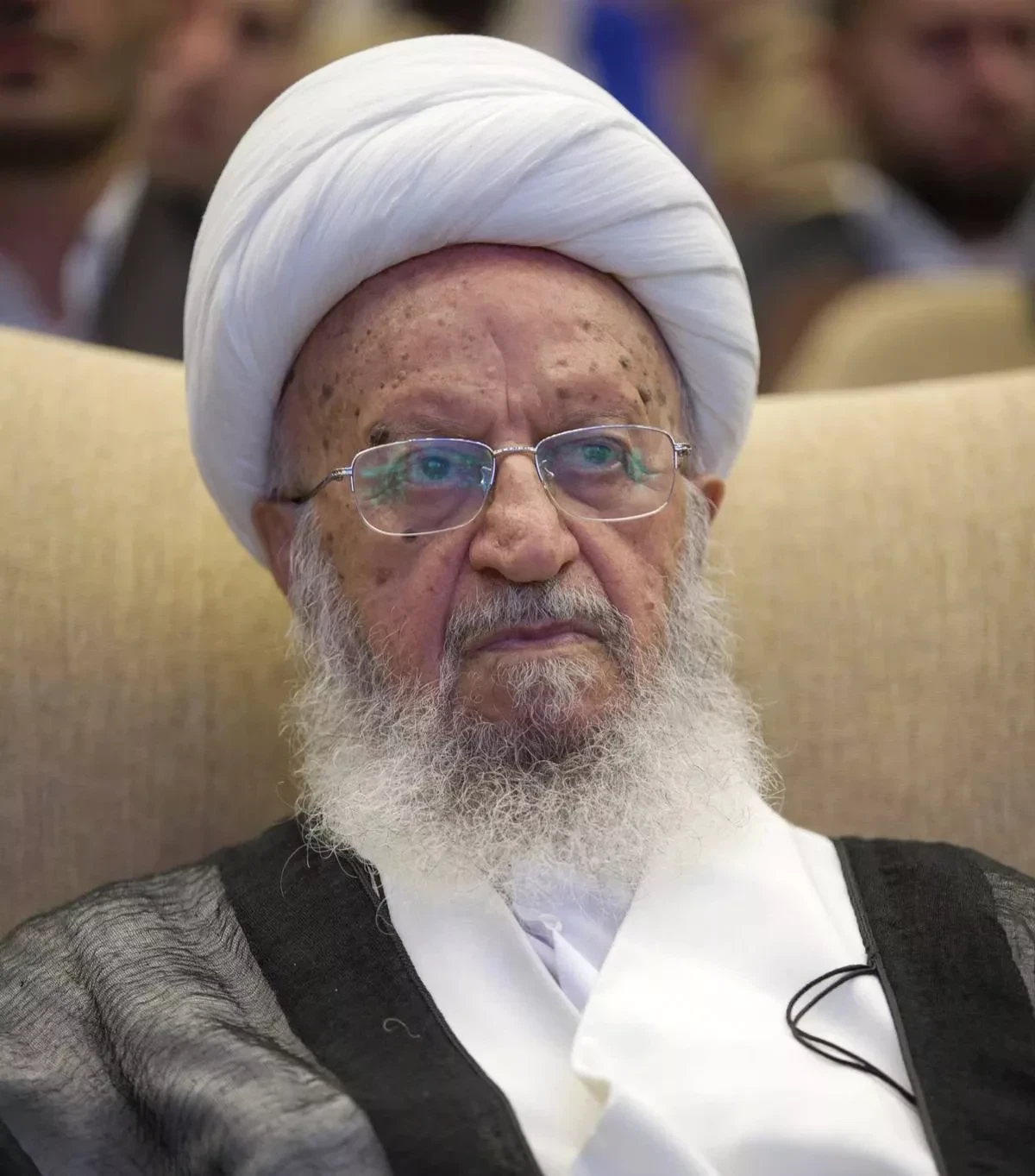
Ayatollah Shirazi from Iran has called for jihad (holy war) against the United States and Israel.
Earlier, the Secretary of Iran's National Security Council stated that Tehran is ready to deliver a powerful blow to the USA and Israel, which they have not yet experienced.
According to the Iranian state news agency "IRNA," citing the Tehran branch of the Red Crescent, Tehran has faced 60 attacks in the last 24 hours, resulting in the deaths of 57 people.
Israeli military reports conducting attacks on the capital, resulting in smoke rising over the city.
North Korea condemns the actions of the USA and Israel as "illegal aggression."
A representative of the North Korean Foreign Ministry stated that the attacks on Iran are "illegal aggression" and violate its sovereignty, as reported by the state news agency "Korean Central News Agency."
The representative noted that the involvement of the USA was expected, adding that it is a natural consequence of their "hegemonic" and "bandit" behavior.
The statement also emphasizes that "aggressive war" between the USA and Israel is unacceptable under any circumstances.
The British Meteorological Organization MTO reports "significant military activity" in the Strait of Hormuz.
The UK Maritime Trade Operations (UKMTO) confirmed the presence of "significant military activity" in the Persian Gulf, Gulf of Oman, and northern Arabian Sea, including the Strait of Hormuz.
In the latest report, the agency warned that the maritime security situation in the region remains extremely tense, and ongoing military activity poses a threat to commercial shipping.
"There is significant military presence and activity in this area. Mariners should be aware of the increased risk of miscalculations or misidentifications, especially near military units and critical maritime facilities," the document added.
UKMTO also noted that rumors about the closure of the Strait of Hormuz continue to circulate in open sources, but no official notifications about a closure have been received.
The British Meteorological Organization MTO also pointed to threats beyond the Strait of Hormuz, including the Bab-el-Mandeb area, where tensions remain high.
The Iranian system is designed to function after the death of the Supreme Leader.

Digital Editor for the Middle East
The death of Supreme Leader Ayatollah Ali Khamenei would be a significant blow to Iran; however, it would not lead to an immediate regime change and is unlikely to shorten the duration of the conflict.
Although Khamenei has been a central figure and ruler of the country for 37 years, Iran's political system is designed to function even after his departure.
Since the Islamic Revolution of 1979, Iran has been governed by Shia religious leaders, and its political and military structures are organized to protect this system.
There is a mechanism for appointing Khamenei's successor, carried out by the Assembly of Experts—a body consisting of 88 religious figures loyal to the regime, ready to choose someone to continue his legacy.
However, the most influential force in Iran is the Islamic Revolutionary Guard Corps (IRGC), which is a powerful ideologically motivated military organization aimed at protecting the country's Islamic system. The IRGC actively opposes the USA and Israel and will not tolerate any manifestations of dissent.
It is expected that the IRGC will play a key role in determining succession and ensuring the protection of its interests in the event of a leadership change.
Gulf countries intercepted the latest wave of attacks from Iran, but there are casualties.
Bahrain: Bahrain's air defense systems successfully intercepted a new wave of Iranian ballistic missiles and drones, state media reports. Officials informed that "some debris" fell in several locations.
Kuwait: Kuwaiti state media also reported that their air defense systems repelled "several hostile aerial targets" on Sunday morning. The country's Ministry of Defense stated that the targets were intercepted in the south of the country, with no casualties.
Qatar: Qatar's state news agency reports injuries to a woman and a child as a result of a drone collision, which was intercepted by UAE air defense systems, with a building in the Union Towers complex in Abu Dhabi. Qatar's Ministry of Defense confirmed that fighter jets and air defense systems successfully repelled Iranian drones and missiles.
Hezbollah leader Naim Qassem expressed condolences over the death of Iran's Supreme Leader Ali Khamenei, calling him a martyr with many followers.
Qassem stated that the "criminal American and Zionist aggression" against Khamenei is "the supremacy of crime," and promised: "We will fulfill our duty in countering aggression, relying on victory, guidance, and support from Allah."
The Lebanese Shia group Hezbollah, one of the most influential Iranian proxy groups in the region, is holding a public gathering today in support of Khamenei and Iran.


