
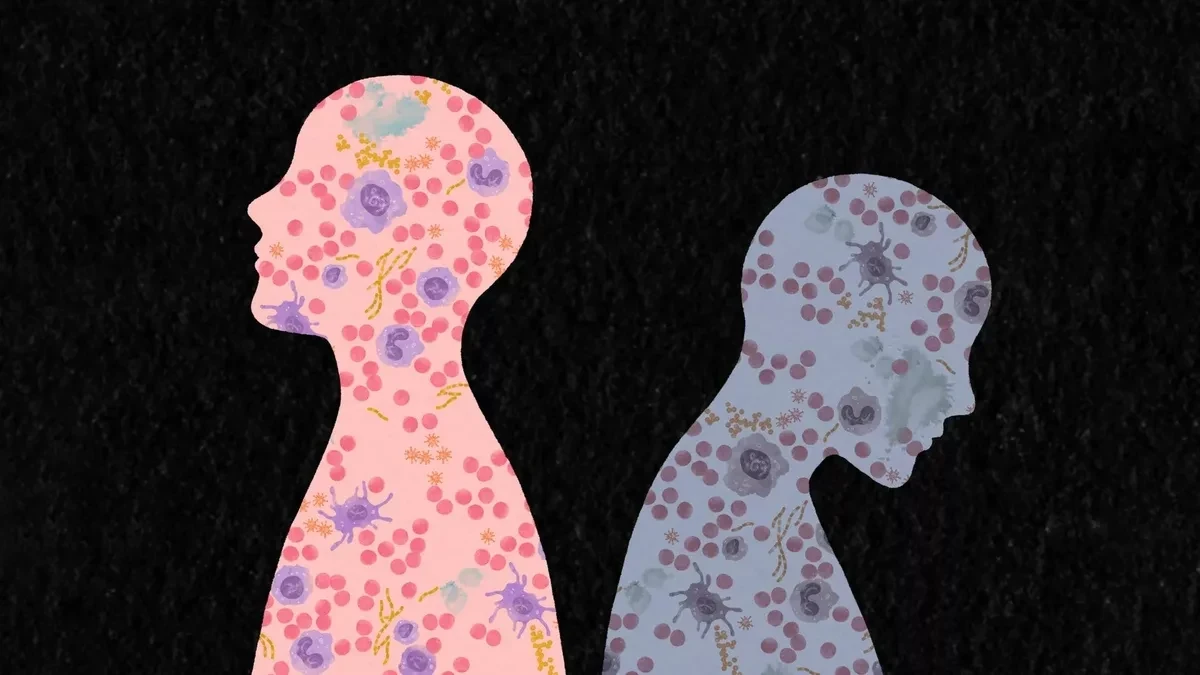
Recently, due to the COVID-19 pandemic, it became clear that different people can experience the same infection in different ways. Some develop mild symptoms, while others may end up hospitalized with severe forms of the disease. This variety of outcomes raises an important question: why do two people exposed to the same virus react so differently?
The answer lies in differences in both genetic background (inherited genes) and life experience (environmental influences, including infections and vaccinations). These factors shape cell behavior by altering them through epigenetic modifications that determine gene activity without changing the DNA itself.
A research team from the Salk Institute has presented an extensive epigenetic catalog that shows how hereditary and life factors influence different types of immune system cells. The database, published in the journal Nature Genetics on January 27, 2026, provides new insights into the reasons for the diversity of immune responses among different people and opens up prospects for developing personalized treatment methods.
“Our immune cells retain a molecular record based on both genes and life experience, and these two aspects shape the immune system in different ways,” comments senior author Joseph Ecker, professor and head of the genetics department at the Salk Institute and a researcher at the Howard Hughes Medical Institute. “Our work demonstrates how infections and environmental factors leave a lasting epigenetic mark that influences the behavior of immune system cells. By understanding this influence at the cellular level, we can link both genetic and epigenetic risk factors to specific cells involved in disease development.”
What is the epigenome and its significance
Every cell in the human body contains identical DNA; however, cells can perform different functions, which depends on epigenetic markers—small molecular tags that regulate the activation or deactivation of specific genes. All such markers collectively form the cell's epigenome.
Unlike DNA, the epigenome is subject to changes over time. Some epigenetic characteristics are determined by inherited genetic differences, while others are formed as a result of life experience. Both of these aspects affect immune system cells, but until now, scientists did not know how exactly hereditary and life factors shape epigenetic changes in immune cells.
“Debates about the influence of heredity and environment have been ongoing for a long time in both biology and society,” says first author Wenliang Wang from Ecker's lab. “We aimed to determine how these factors specifically affect our immune cells and overall health.”
How life experience leaves a mark on immune cells
To understand the influence of genetics and life experience, the researchers analyzed blood samples from 110 patients with diverse backgrounds. These samples reflected a wide range of genetic variants and life experiences, including infections with influenza, HIV-1, MRSA, MSSA, and SARS-CoV-2, vaccinations against anthrax, and exposure to organophosphate pesticides.
During the study, the team examined four main types of immune system cells. T-lymphocytes and B-lymphocytes are known for their long-term immune memory, while monocytes and natural killers respond quickly to threats. By comparing the epigenetic profiles of these cells, the scientists created an extensive catalog of epigenetic markers known as differentially methylated regions (DMRs) for each type of immune system cell.
“We noticed that genetic variants associated with diseases often act by altering DNA methylation in specific types of cells,” explains first author Ubin Ding, a postdoc in Ecker's lab. “By mapping these relationships, we can more accurately identify which cells and molecular pathways may be affected by genes associated with diseases, opening new opportunities for targeted therapies.”
Separation of epigenetic changes by type of inheritance
A key achievement of this study was distinguishing between epigenetic changes associated with genetics (gDMR) and those driven by life experience (eDMR). The scientists found that these two types of markers manifest in different regions of the epigenome. Changes that are genetically inherited are more commonly found in stable genomic regions, especially in long-lived T- and B-lymphocytes, while experience-related changes are concentrated in flexible regulatory areas responsible for rapid immune responses.
These patterns suggest that genetics lays down long-term immune programs, while life experience adjusts the response of immune cells to specific circumstances. Further research will be needed to fully understand how these factors affect the immune system under normal health conditions and during diseases.
“Our atlas of immune cells from the human population will be a valuable resource for future research aimed at understanding infectious and genetic diseases, including diagnostics and prognostics,” adds first author Manoj Hariharan, a senior researcher in Ecker's lab. “When diseases arise, we often cannot immediately determine the causes and severity, but the epigenetic markers we developed could provide a foundation for classifying and assessing these situations.”
Prospects for disease prediction and personalized medicine
The results of the study highlight the influence of both genetic and life factors on the formation of the identity of immune system cells and the behavior of the overall immune response. The new catalog can serve as a basis for developing a more personalized approach to disease treatment and prevention.
Ecker notes that as data accumulates from new patients, this resource could help predict responses to future infections. For instance, if sufficient data is obtained from patients with COVID-19, researchers may find that those who have already had the infection share common protective eDMRs. Doctors could then examine the immune cells of newly infected patients and check for the presence of protective markers. If these are absent, it could serve as a basis for developing new treatment methods through targeted interventions on the relevant regulatory pathways.
“Our work lays the groundwork for creating highly precise strategies for preventing infectious diseases,” concludes Wang. “Regarding COVID-19, influenza, and other infections, we will be able to predict how a person will respond to an infection even before it occurs, as data and models continue to expand. We will be able to use the genome to predict the impact of infection on the epigenome and, consequently, on symptoms.”
The research was conducted with support from the Defense Advanced Research Projects Agency (DARPA), the National Institutes of Health, and the National Science Foundation.


