
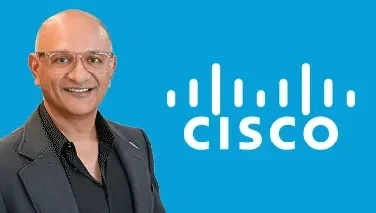
At a recent AI summit in Amsterdam, Jeetu Patel stated that Cisco has developed a product whose code is entirely generated by AI. He also added that by the end of 2026, the company plans to have at least half a dozen such products.
When asked how this would affect the future of programmers, Patel advised: “Do not be afraid that AI will take your job. It is much more concerning that someone who can better utilize AI will do so. At Cisco, AI development will become the norm for all programmers.”
Patel reported that the shift to specialized development will allow the team to be reduced from eight to three people while adding five AI agents, ultimately increasing productivity threefold.
AI agents will play a key role in this process — systems capable of planning and executing tasks with minimal human involvement, such as organizing trips or sending emails.
However, even in such a scenario, developers will still need to review and adjust the code.
Patel also criticized the traditional perception of the "human in the loop" concept, arguing that AI should be integrated into every aspect of work, perceived as a digital colleague rather than just a tool.
The Dangers of Uncontrolled AI Agents
Despite his optimistic view on AI, Patel expressed concerns about the safety associated with these technologies. “What worries me most are security issues. It is important not to idealize AI and to seriously consider its potential negative consequences,” he emphasized.
He added, “Agents that will perform tasks on our behalf must undergo reliability checks, just like any employee of the company.” Cisco plans to invest billions of dollars in security to protect AI agents from attacks and prevent their uncontrolled behavior.
Patel noted, “We must protect agents from the external environment and protect the world around us from agents.”
The company aims to become a crucial infrastructure in the AI era by creating a so-called “full stack” — from silicon chips to software solutions.
By developing everything from specialized silicon chips to software, Cisco hopes to become that essential infrastructure for AI.
Looking to the future, Patel emphasized that increasing productivity is not the main goal. “The most important thing is the new ideas and knowledge that AI can provide, which do not exist in human understanding. These ideas can help solve problems we never even dreamed of before,” he remarked, speaking about potential breakthroughs in medicine and energy.


