
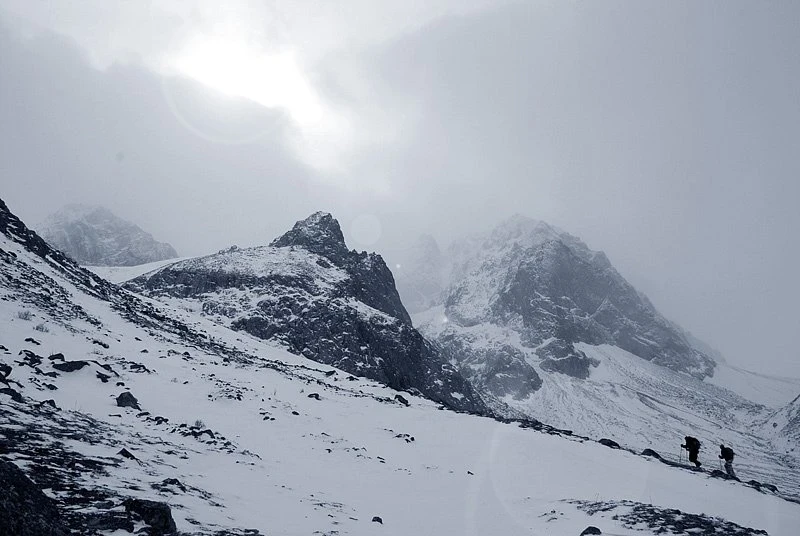
Glaciers play a vital role in feeding rivers such as the Indus, Nile, Ganges, and Colorado, which provide irrigation for agriculture, drinking water for nearly two billion people, and electricity. The accelerated melting of these ice masses leads to changes in runoff patterns, creating risks for populations by depriving them of resources for living and agriculture.
In the short term, the sharp reduction of glaciers can cause ecological disasters, including floods caused by glacial lake outburst and landslides. It is predicted that by the end of the century, many glaciers will significantly reduce their contribution to river flow, negatively impacting agriculture in both mountainous areas and fertile lowlands.
Mountainous regions, home to about 1.2 billion people, occupy more than a quarter of the Earth's surface and experience a faster rise in temperature than the global average. This makes their populations particularly vulnerable to climate change and seasonal reductions in available water resources for agriculture. Often, alternative water sources are lacking, which can lead to population migration and increased social instability.
Over the past six years, there has been accelerated glacier melting, and its consequences are becoming evident. From the Andes to the Himalayas, local communities are facing reduced snowfall seasons and instability in water resources. In Peru, this has led to decreased crop yields, while in Pakistan, the reduction in meltwater threatens agricultural cycles. Many glaciers have reached their "peak flow," after which water volumes will begin to decrease, leading to shortages for all users dependent on glacial rivers.
Glaciers are also crucial for indigenous peoples and mountain dwellers, where they are considered sacred. Their disappearance threatens centuries-old traditions, rituals, and cultural heritage.
Despite the seriousness of the situation, there is an opportunity to change course; however, global efforts in this direction remain fragmented. In this regard, the UN has declared 2025 the International Year of Glacier Preservation to emphasize the importance of these ecosystems for our future.
Radical changes in policy, investment, and management are necessary to ensure food and water security in mountainous and lowland areas.
Key measures should include reducing carbon emissions, improving water resource management, establishing early warning systems, and implementing adaptive agricultural methods. It is important to turn the challenges posed by glacier melting into opportunities for all.
Among the solutions is sustainable agriculture, which can effectively use water resources and implement adaptive methods. Techniques such as terraced farming and agroforestry, employed by mountain communities, help conserve soil and water, reducing risks and supporting livelihoods. These efforts should take into account indigenous knowledge and address the root causes of vulnerability, such as poverty and gender inequality.
Additionally, investments in water supply and agricultural infrastructure are needed, including climate financing to support vulnerable populations in mountainous regions.
It is crucial for governments to align their strategies and measures to address the complex issues surrounding water resources and agriculture. The challenges of mountainous regions are often overlooked in national climate policies, so collaborative solutions, including transboundary cooperation in water resource management, need to be developed.
To prepare for a future with diminishing glaciers and water resources, innovation and coordinated action are required. In Kyrgyzstan, the FAO supports the creation of artificial glaciers that help conserve water for irrigation. In the Batken region, this initiative has preserved over 1.5 million cubic meters of ice.
In Ladakh, India, the social enterprise "Ice Acres" has created automated systems for storing unused water and freezing it. In the Peruvian Andes, locals are implementing natural filtration systems to improve water quality, which has been contaminated by minerals due to glacier melting.
However, more efforts are needed to collaboratively address this issue. Water is a vital resource that depends on the preservation of glaciers, and ignoring their melting jeopardizes global food and water security.
—
The FAO is responsible for organizing the International Mountain Day in collaboration with the Mountain Partnership Secretariat with the support of the governments of Italy, Andorra, and Switzerland. The Secretariat is also working with UNESCO and the World Meteorological Organization to prepare for the International Year of Glacier Preservation in 2025.


