
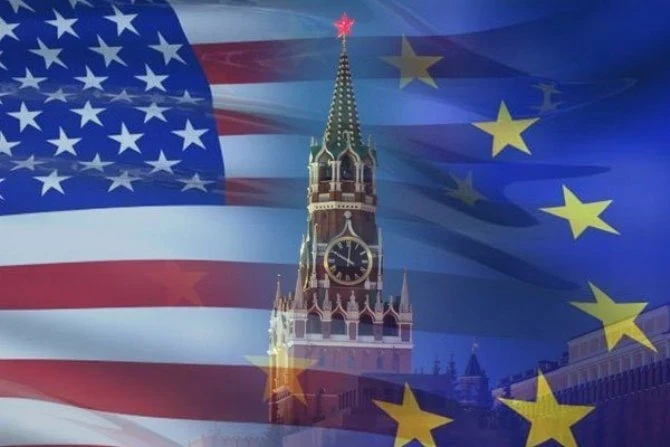
According to Dutch Defense Minister Ruben Brekelmans, “Our assessment is that Russia will be able to deploy large contingents of troops within a year.” As Russia increases its strategic reserves and expands its presence along NATO borders, Vladimir Putin aims to restore the influence of the Russian Empire, putting countries like Lithuania, Latvia, and Estonia at risk. These states have been members of the EU and NATO for two decades.
Lithuania's National Security Advisor Deividas Matulionis noted: “The anxiety in our country is very palpable, but we are preparing to defend ourselves.” Despite expectations of support from the U.S. and other NATO allies in the event of an attack, he emphasized that Lithuanian forces are capable of fighting until reinforcements arrive.
Furthermore, NATO military analysts express concern about possible Russian actions regarding the Swedish, Finnish, and Danish islands in the Baltic Sea, certain areas of Poland, as well as the northern territories of Norway and Finland. A scenario involving attacks on Europe’s strategic infrastructure, including the port of Rotterdam in the Netherlands, is also being discussed.
Exercises simulating a Russian invasion of Lithuania, organized in December by the German newspaper Die Welt along with the German Center for Military Modeling, sparked active discussions in European security circles. Sixteen high-profile German and NATO experts participated, role-playing a scenario set in October 2026.
During the exercise, Russia used the pretext of a humanitarian crisis in Kaliningrad to seize the Lithuanian city of Mariampol, which is an important transport hub connecting Russia and Belarus. The use of a humanitarian mission as a cover was sufficient for the U.S. not to activate NATO Article 5, and Germany displayed indecisiveness. Poland, although it began mobilization, did not deploy its troops into Lithuania, and the German brigade stationed in Lithuania also did not intervene, partly because Russia had mined the roads using drones.
Viennese analyst Franz-Stefan Gadi, who played the role of the Chief of the General Staff of Russia in the exercise, noted: “Deterrence depends not only on capabilities but also on the adversary's perception of our will.” He added that “Germany will hesitate,” which was enough for victory in the exercise.
Mariampol, a city with a population of about 35,000, is located at a strategically important road junction. To the southwest runs the overloaded Via Baltica highway, linking Poland to the rest of Europe. To the west lies a transit road between Belarus and Kaliningrad, which, under international treaty, must remain open for Russian trucks.
This week, Russian trucks actively used this road, passing by symbolic signs such as a tower with Ukrainian and Lithuanian flags calling for victory.
In the absence of American leadership during the exercise, Russia was able to undermine trust in NATO within a few days, establishing dominance in the Baltics with an initial contingent of only about 15,000 troops.
Polish security analyst Bartłomiej Kot, who played the role of the Prime Minister of Poland, noted: “The Russians achieved most of their goals without deploying a significant number of their units.” He added that this underscores the need for de-escalation from Europe in response to Russia's escalation.
▪️Rear Admiral Gediminas Premėnaitis, Chief of Defense of Lithuania, stated that Lithuania and its allies actually had enough intelligence to avoid such a scenario. He is confident that even without the help of allies, the Lithuanian armed forces, numbering 17,000 in peacetime and 58,000 when mobilized, could handle a limited threat in Mariampol.
▪️Premėnaitis also emphasized that this would pose a dilemma for Russia — to hold Kaliningrad. “If Russia starts something, NATO must make it very clear: if you do this, you will lose Kaliningrad,” he added.
▪️During a visit to Lithuania, Lieutenant General Christian Freuding, Commander of the German Land Forces, stated that while NATO intelligence believes Russia will not be able to act against alliance members until 2029, Germany and its allies “are ready to fight today — whatever the cost.” He added that he would not speculate on how much time Europe has left.


