
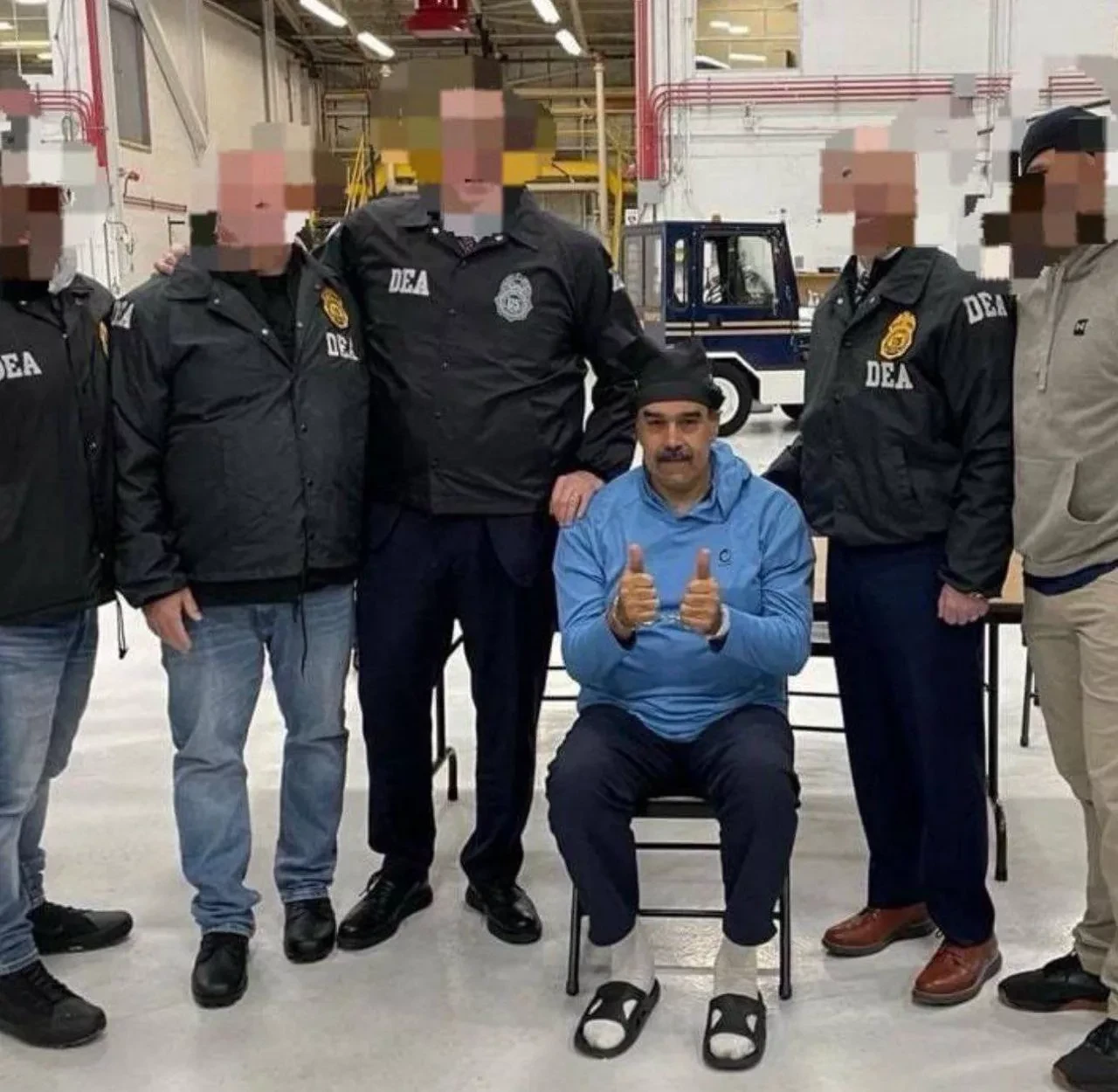
The attack carried out by the United States on January 3 was classified as an illegal use of force, violating the provisions of the UN Charter and creating additional risks for the international order. Amnesty International emphasizes that the ongoing crimes of the Maduro regime against the Venezuelan people are a serious issue.
The Secretary General of Amnesty International, Agnes Callamard, stated: “The US military operation in Venezuela is a violation of the UN Charter and endangers the civilian population, undermines the protective mechanisms of international law, and may have devastating consequences for human rights in the country.” She also emphasized that the use of force by the Trump administration was illegal and could provoke similar actions by other countries in the future.
“The US military operation in Venezuela is a clear violation of the UN Charter. It is an act of aggression that endangers the civilian population and undermines the protective mechanisms of international law.”
Agnes Callamard, Secretary General of Amnesty International
Agnes Callamard, Secretary General of Amnesty International
As President Trump noted, one of the factors contributing to the attack on January 3 was control over resources and the geopolitical situation in the region. He also openly stated his right to control policy towards Venezuela. In the context of an unstable internal situation, where repressive policies continue, Venezuelans face an additional threat from US intervention, which could exacerbate their plight.
Agnes Callamard also added: “The impunity of Venezuelan authorities committing crimes against humanity for over a decade continues under the rule of Delcy Rodriguez. Victims are still waiting for justice while human rights defenders are being persecuted.” She emphasized that both the US for its actions and the Venezuelan authorities for human rights violations must be held accountable.
“Two wrongs do not make a right. Full accountability and reparations are necessary for both the illegal attack by the Trump administration on Venezuela and the crimes under international law committed by the Venezuelan authorities.”
Agnes Callamard, Secretary General of Amnesty International
Agnes Callamard, Secretary General of Amnesty International
President Trump has repeatedly threatened to expand military actions in other countries, which threatens international legal norms and human rights. After the attack on Venezuela, he mentioned the possibility of using force against Colombia, Cuba, Greenland, Iran, and Mexico. At the same time, aggressive actions by China and Russia also pose a threat to international security.
Agnes Callamard noted: “These actions by the US risk normalizing an approach where force becomes a right, undermining the foundations of international order and human rights. Other countries must stand against this.”
Why this is an act of aggression and an illegal use of force
International law clearly prohibits the use of force against other states. Article 2(4) of the UN Charter prohibits the threat of force or its use against territorial integrity. The Declaration on Principles of International Law reaffirms the prohibition of armed intervention. According to UN General Assembly Resolution 3314, the use of force in violation of the Charter is a sign of aggression, including bombings and attacks on the armed forces of another state.
The US began escalating the conflict with extrajudicial killings and the capture of President Maduro, claiming to fight drug trafficking; however, the true aim was an attempt to control Venezuela's natural resources. Even if the US were right in its accusations, the use of force without the consent of another state remains illegal.
The Inter-American Juridical Committee also confirmed that the only exceptions to the prohibition on the use of force are self-defense and UN Security Council sanctions, which should protect peace and human rights in the region.
The US attack encompasses at least three of the seven actions defined as acts of aggression, including the attack of armed forces on the territory of another state and the use of any weapon against it.
International human rights law is always applicable. The UN Human Rights Committee asserts that acts of aggression leading to loss of life constitute a violation of the right to life.
“Without the approval of the Security Council or grounds for self-defense, the use of force against Venezuela was illegal and constituted an act of aggression. The right to life does not cease when a government decides to ignore the UN Charter,” noted Agnes Callamard.
The situation inside Venezuela: the repressive machine continues to operate
Amnesty International has documented systematic repression in Venezuela for many years, including arbitrary detentions and enforced disappearances. In 2019, the organization uncovered evidence of systematic attacks on the civilian population and concluded that crimes against humanity have been committed in the country since 2014. Since then, additional evidence of persecution and enforced disappearances has been provided.
“Crimes against humanity do not end with Maduro's departure. They continue to occur, and Venezuelan victims and their families still suffer physical and psychological trauma,” stated Agnes Callamard.
“Crimes against humanity do not end with Maduro's departure. They continue to be committed, and Venezuelan victims, survivors, and their families still bear physical and psychological scars.”
Agnes Callamard, Secretary General of Amnesty International
Agnes Callamard, Secretary General of Amnesty International
Although Venezuelan authorities announced the release of several politically motivated detainees, in reality, the number of those released was minimal, and many remain under control. The risk of repression from the authorities in response to US intervention has increased. Security forces continue to detain and persecute those who support US actions, including journalists and human rights defenders.
Agnes Callamard urged the Venezuelan authorities to immediately release all arbitrarily detained individuals, end enforced disappearances and torture, and guarantee rights to freedom of speech and assembly. Without this, new cycles of violence will only exacerbate the situation.
In 2020, the International Criminal Court began an investigation into crimes against humanity in Venezuela, and given the scale of violations, Nicolás Maduro may become the subject of criminal prosecution.
“Victims have the right to justice. We urge the International Criminal Court to expedite its actions, including issuing arrest warrants if necessary evidence is gathered,” concluded Agnes Callamard.
A dangerous precedent for international policy as a whole
After the attack on January 3, President Trump effectively declared his intention to ignore international law, asserting that the US has the right to control the Western Hemisphere, including the use of force. This position has been termed the “Trump-Monroe Doctrine.” This is not the first instance of unilateral use of force by the US, but it is the first time actions have been justified so controversially in relation to international law.
The strike on January 3 marked the culmination of several months of attacks on alleged “narco-submarines” in the region. Amnesty International and international law experts view these actions as extrajudicial killings and call for their condemnation.
What needs to be done: demands for protection and justice
States must reaffirm the supremacy of the UN Charter and reject the normalization of unilateral use of force. Protecting civilians and human rights must become a priority in international policy.
“Today’s silence will become tomorrow’s sanction for violence. The suffering of those affected by the illegal use of force and those who are brutally suppressed cannot be compared. The solution must be based on adherence to international law,” stated Agnes Callamard.
The US must cease any actions against Venezuela and investigate the deaths of civilians. Venezuelan authorities must also end repression and guarantee rights to freedom of speech and assembly. Those responsible for violations must be held accountable, and victims must be granted the right to justice and reparations.


