
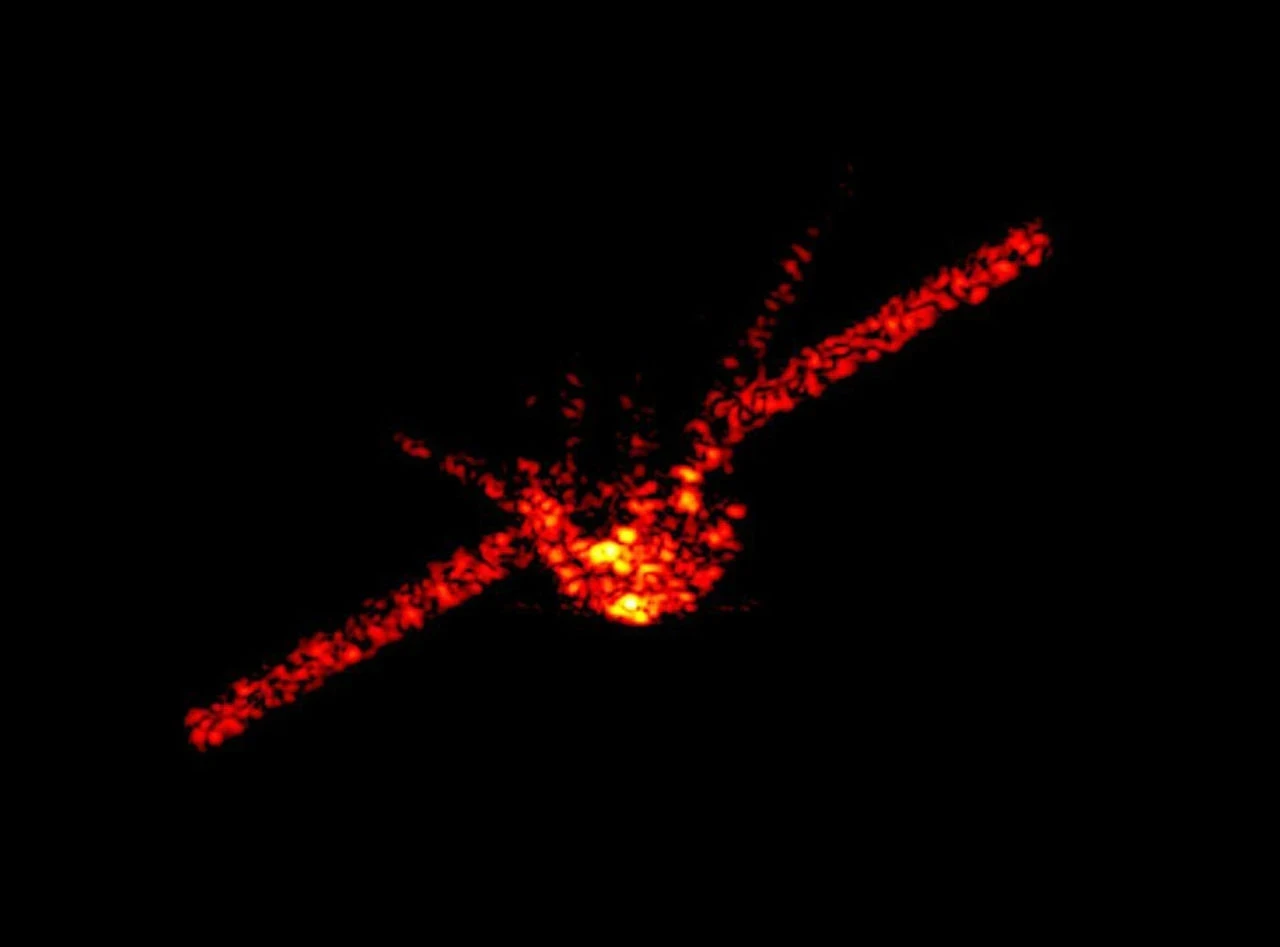
Humanity is facing new challenges, and climate change is not the only one.
With the increasing pollution of low Earth orbit by satellites and space debris, a group of scientists warns of a potential threat. In the event of a critical situation, this region could become a dangerous vortex of debris, threatening spacecraft that dare to ascend and raining fragments down on Earth.
The study, currently in the preliminary discussion stage, is based on a theory proposed by NASA scientist Donald Kessler. He described how several random collisions between satellites could initiate a vicious cycle, where the resulting debris leads to new collisions, increasing the amount of space junk. In the worst-case scenario, this vortex could leave humanity stranded on Earth, postponing space travel for many years.
Now, as the number of satellites in low Earth orbit is growing at a rapid pace, the concept of the "Kessler syndrome" is becoming increasingly relevant. For example, SpaceX, Elon Musk's company, plans to launch over 9,000 disposable satellites, while Amazon and China are also developing their own mega-constellations.
Initially, Kessler believed that such a catastrophe would occur gradually; however, new data point to a more grim scenario. The occurrence of a powerful solar storm could accelerate this process. These solar flares emit electromagnetic waves capable of disrupting electrical grids and communications. In theory, a sufficiently strong storm could disable the navigation systems of satellites, leading to their uncontrolled movement.
This raises serious concerns. Due to the constant risk of collision, SpaceX's disposable satellites are forced to regularly perform maneuvers to prevent accidents; last year, over 300,000 maneuvers were conducted.
As part of this study, a new metric called the CRASH clock has been introduced, which indicates how much time it would take for a catastrophic collision to occur in the event of a loss of navigation for satellites during a crisis situation, such as a solar storm.
The findings suggest that the situation could quickly spiral out of control. Researchers estimate that satellites could "approach" — come within less than one kilometer of each other — approximately every 36 seconds in low Earth orbit, which is an extremely dangerous distance in space.
Considering these factors, scientists have assessed the CRASH period at just 5.5 days, meaning humanity could be left with minimal time to respond in the event of a solar storm. If an event similar to the well-known Carrington event of 1859 were to occur, which knocked out the telegraph network and would likely cause widespread power outages today, we would face even more serious problems requiring immediate attention.


