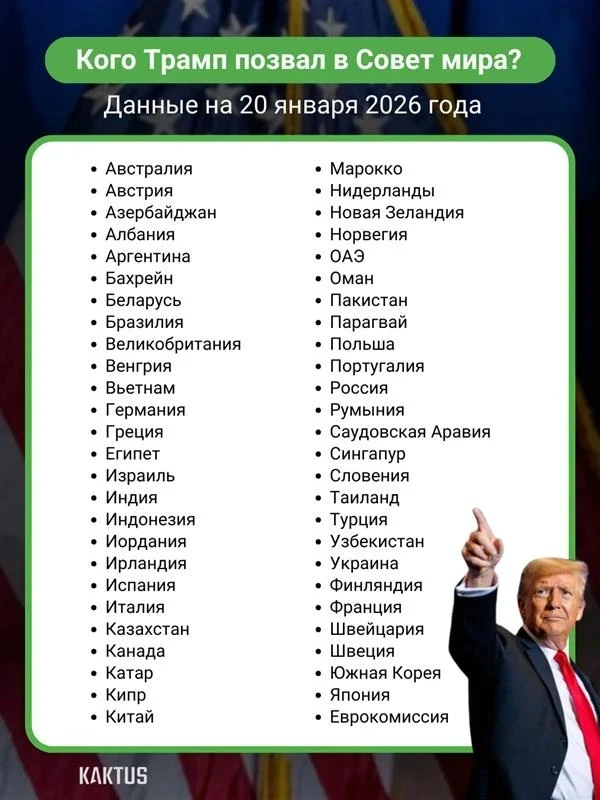
Seven countries, including Saudi Arabia, Turkey, and Egypt, have expressed their desire to join the Peace Council initiated by U.S. President Donald Trump. This was reported by the BBC.
Israel has already confirmed its participation in this project.
On Wednesday evening, Trump announced that Vladimir Putin also expressed interest, but the Russian president clarified that his country is still analyzing the proposal.
The creation of the Council was initially intended as a step towards ending the two-year war between Israel and Hamas in Gaza, as well as for overseeing reconstruction processes. However, the draft charter does not mention Palestinian territory, which may indicate an intention to replace the functions of the UN.
Saudi Arabia noted that countries with a Muslim majority — including Turkey, Egypt, Jordan, Indonesia, Pakistan, and Qatar — support the goal of achieving a sustainable ceasefire in Gaza and facilitating reconstruction, as well as moving towards a "just and lasting peace."
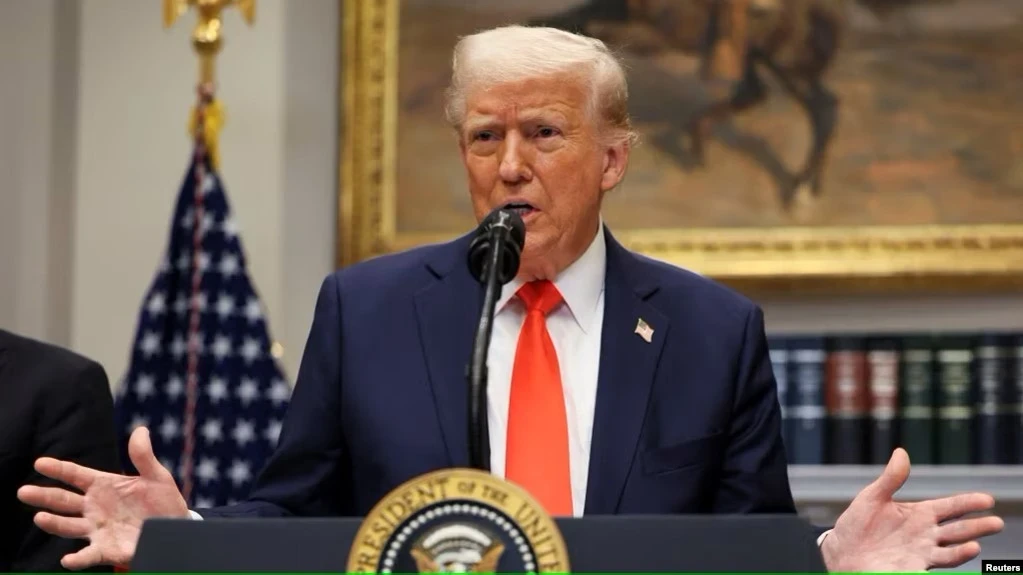
At the World Economic Forum in Switzerland, Trump, speaking with media representatives, stated that Putin accepted the invitation, adding: "He was invited, he agreed. Many others also agreed." Putin quickly responded, stating that his country is considering the invitation, as reported by Reuters. He also mentioned that Russia is ready to allocate $1 billion from frozen assets, emphasizing the importance of the council for the Middle East.
It is unclear how many countries received invitations, including Canada and the UK, but they have not yet made official statements. The UAE, Bahrain, Albania, Armenia, Azerbaijan, Belarus, Hungary, Kazakhstan, Morocco, and Vietnam have already signed the agreement.
On Wednesday, the Vatican also confirmed that Pope Leo received an invitation. Vatican Secretary of State Cardinal Pietro Parolin noted that the Pope will need time to make a decision about his participation.
Slovenian Prime Minister Robert Golob, on the other hand, declined the invitation, pointing to the risk of this organization interfering in the international order.
According to a leaked document, the charter of the Peace Council will come into effect after three states officially sign it. Council members will receive renewable three-year terms, and permanent seats will be granted to those who contribute $1 billion (£740 million).
The organization has been declared as an international structure authorized to act in accordance with international law to achieve peace, with Trump serving as chairman and representative of the U.S., having the authority to appoint members of the executive council and manage subsidiary organizations.
Last week, the White House announced the appointment of seven members to the founding Executive Council, including U.S. Secretary of State Marco Rubio, Special Envoy for the Middle East Steve Vitkoff, Trump’s son-in-law Jared Kushner, and former UK Prime Minister Tony Blair.
Former UN Special Envoy for the Middle East Nikolai Mladenov was appointed as the council's representative in Gaza, which is part of the second phase of the plan covering reconstruction and demilitarization, approved by a UN Security Council resolution by the end of 2027.
On Saturday, Netanyahu's office stated that the composition of the Gaza Executive Council "was not agreed upon with Israel and contradicts its policy."
Israeli media reported that the decision to include representatives from Turkey and Qatar in the conference, who, along with Egypt and the U.S., facilitated the ceasefire in October, was made "without Israel's involvement."
As part of the first phase of the peace plan, Hamas and Israel agreed on a ceasefire, the exchange of living and deceased Israeli hostages for Palestinian prisoners in Israeli jails, partial withdrawal of Israeli troops, and increased humanitarian aid supplies.
Israel stated that it could move to the second phase only after Hamas hands over the body of the last deceased hostage.
The second phase faces serious difficulties, as Hamas previously refused to disarm without guarantees for the creation of an independent Palestinian state, while Israel does not commit to fully withdrawing its troops from Gaza.
The ceasefire remains fragile. According to the Gaza Ministry of Health, since its implementation, more than 460 Palestinians have died as a result of Israeli strikes, while the Israeli army reported the deaths of three of its soldiers from Palestinian attacks.
The conflict began after Hamas attacked southern Israel on October 7, 2023, resulting in approximately 1,200 deaths and 251 people being taken hostage.
In response to this attack, Israel launched a military operation in the Gaza Strip, during which, according to the local health ministry, more than 71,550 people have died.