
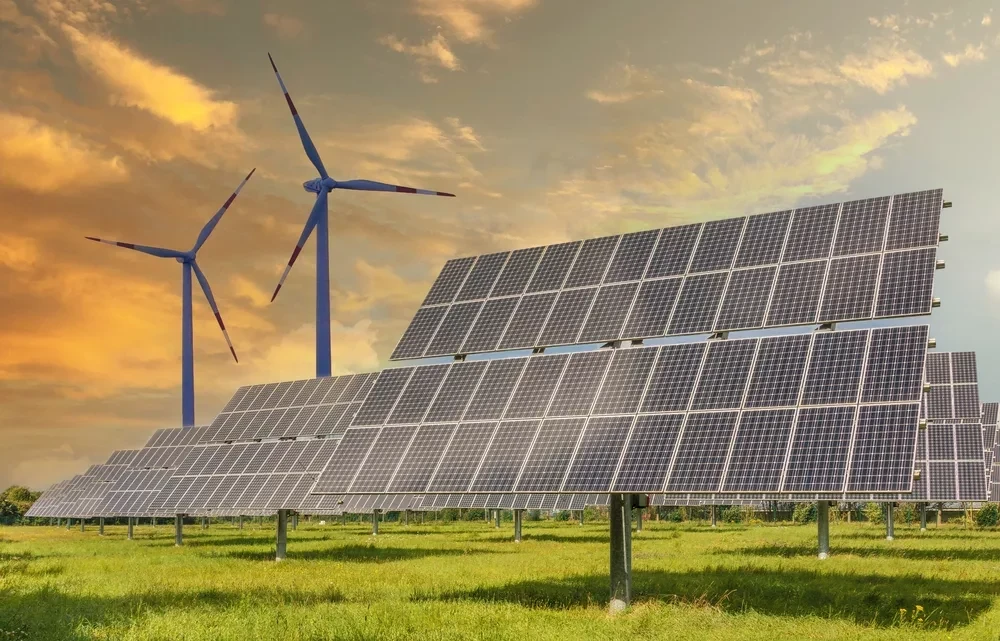
India, having become the only country within the G20, has managed to achieve its climate goal for 2030 five years ahead of schedule. By the end of 2025, the share of non-fossil energy sources in the country's total installed capacity reached 50%, which corresponds to 484 GW. This achievement is considered an important step in the implementation of Nationally Determined Contributions (NDCs) and represents a significant contribution to the global climate agenda.
This progress in clean energy has been supported by a record increase in capacity: in 2025, India added 44.5 GW of renewable sources, the highest annual increase in history. Solar energy showed the greatest growth, reaching 135 GW, while wind energy approached 54 GW. Prime Minister Narendra Modi stated that India demonstrates a "deep commitment to a green and sustainable future," which is confirmed by the active expansion of new capacities.
This success has been made possible by a combination of various regulatory initiatives, institutional support, and accessible financial instruments. Over the past ten years, auctions and reverse auctions have led to a nearly 80% reduction in tariffs for solar projects. At the same time, programs aimed at stimulating production have increased the output of solar modules to 144 GW, of which 81 GW was added in 2025 alone. This has strengthened the domestic manufacturing chain and reduced dependence on imports.
The economic impact of the transition to clean energy has also been significant. India has managed to avoid emissions of 410.9 million tons of CO₂ and saved over $46 billion in costs related to pollution and energy resources. Of this amount, $14.9 billion was due to reduced consumption of fossil sources, while $31.7 billion was attributed to improved public health and air quality. These economic benefits serve as an important argument for accelerating the transition to carbon-free sources in other Global South countries.
The country has set a new ambitious goal of achieving 500 GW of renewable capacity by 2030. To achieve this task, special programs are being developed: the PM Surya Ghar Muft Bijli Yojana, which expands household access to solar rooftops, and PM Kusum, which helps farmers transition to solar energy sources. Additionally, the National Mission on Green Hydrogen is forming new competitive industries in hydrogen production.
India's experience is actively discussed at international climate forums such as COP, the IRENA Assembly, and the Sustainable Development Week in Abu Dhabi. In the context of insufficient fulfillment of climate goals, India is beginning to be seen as a role model for countries facing limited access to finance and technology.
As the chair of the Assembly of the International Solar Alliance, India also shares its experience with Global South countries and small island states. Within the alliance, the focus is on financing, digitalization, demand aggregation, and the development of new models of distributed generation. This approach is seen as a link between climate commitments and their practical implementation.
Source: https://www.newsweek.com/g20-benchmark-indias-journey-from-clean-energy-pledges-to-real-impact-11377100


