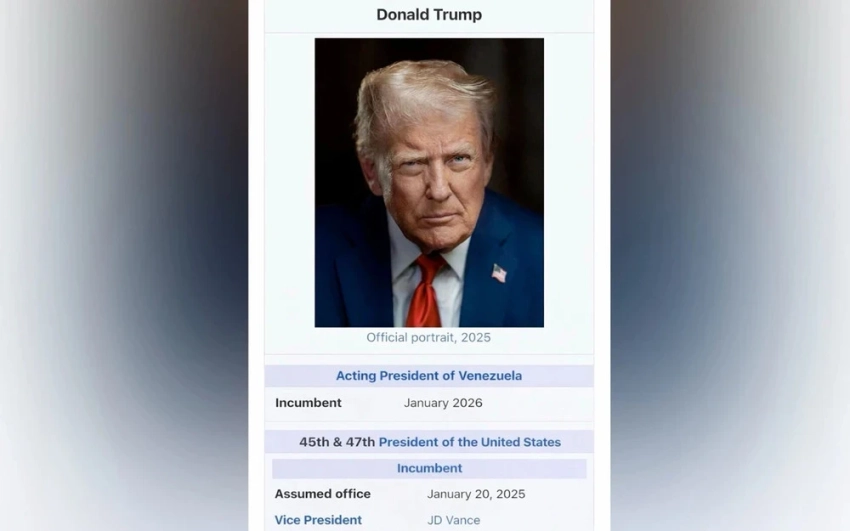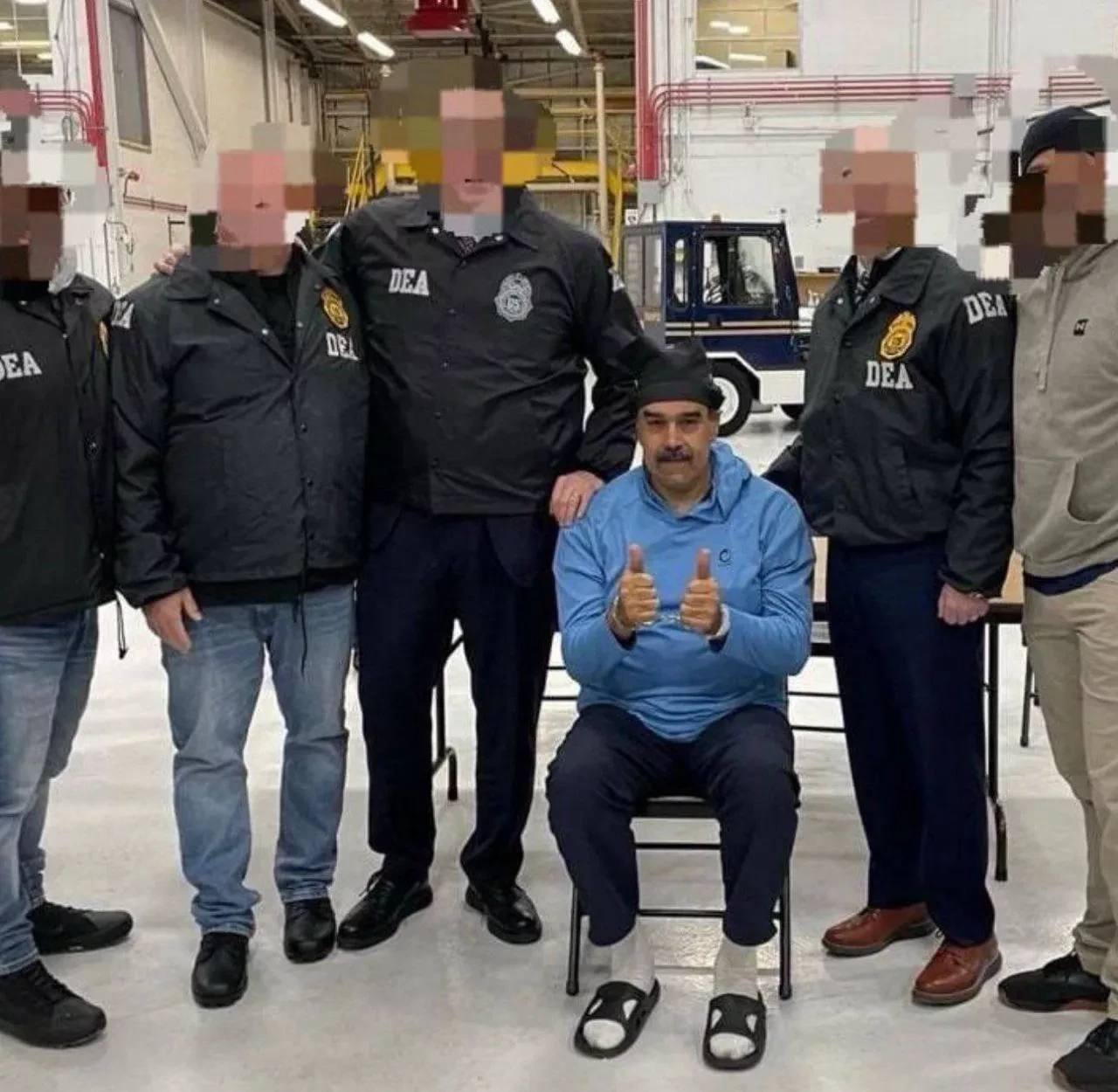
Tarik Ali emphasizes that Chavez warned: “They will try to link you to drug trafficking, which will lead to everything being directed against the ‘drug-trafficker president,’ right?” On the morning of January 3, Trump tweeted about a “major strike” against Maduro’s regime. He claimed that the president and his wife Cilia had been “captured and taken out of the country.” Trump promised to provide more detailed information later, although the incoming data was contradictory.
On the same day, a friend from Caracas called me, saying that secret negotiations were taking place between the Venezuelan regime and the U.S. The American authorities wanted to take revenge for Maduro's brazen behavior, but he rejected the comfortable relocation to Turkey that was offered to him, which, according to my interlocutor, is commendable. Despite his repeated offers for negotiations over oil and drugs, Maduro was also rallying the people against the increasing American military power in the region.
Trump apparently preferred to negotiate with Vice President Delcy Rodriguez and other high-ranking officials, including Interior Minister Diosdado Cabello and Defense Minister Vladimir Padrino, both of whom have support in the army of about 100,000 troops. As Trump’s threat of military intervention grew, Maduro’s government began arming the civilian population.
The question of who will now govern Venezuela became paramount. Trump expressed his position: “We will govern the country until a safe and legal transition begins.” However, the administration faced a difficulty: Trump’s supporters do not want American soldiers involved in foreign conflicts, which contradicts their campaign promises. Nevertheless, far-right Latin Americans, including Rubio, were dissatisfied that the Bolivarians were still in power.
Rumors about the possible appointment of Marco Rubio as the new governor or consul to manage Venezuela also circulated. The day after Maduro’s kidnapping, Cabello stated: “This is an attack on Venezuela. We urge the people to remain calm and trust the leadership.” Rodriguez, appointed by the Venezuelan Supreme Court as interim president, called for Maduro’s release, to which Trump responded in an interview with “The Atlantic,” criticizing her lack of submission.
Trump also noted that a regime change, whatever it may be called, would be better than the current situation. However, the administration seems unaware that most Venezuelans do not welcome U.S. intervention. This is due to history, as Simon Bolivar warned against new imperial interventions. From Sunday, protests demanding Maduro’s release have been taking place across the country, including a major rally in Caracas.
* * *
As Chavez predicted, Trump and Rubio are trying to accuse Maduro of “narcoterrorism,” which can be seen as a continuation of the use of non-military pressure. Rubio claimed on Twitter that Maduro is not the president of Venezuela and is linked to drug trafficking. This is ironic, as Rubio himself has connections to drug trafficking.
An important aspect is that “Delta Force,” the American special unit involved in Maduro’s kidnapping, is also linked to drug trafficking. Seth Harp’s book “Fort Bragg Cartel” examines the connections between the American military base and drug trafficking. This operation to kidnap the president was carried out with the help of their network.
Attorney General Pam Bondi announced charges against Maduro in New York; however, many lawyers do not take these charges seriously. It looks like a theatrical performance, and highly qualified lawyers will likely defend Maduro. This underscores that appointments in the Trump administration were based on loyalty rather than competence.
While the charges against Maduro somewhat resemble the Noriega case, it is important to understand that Maduro did not cooperate with the CIA as the Panamanian dictator did. At the same time, there is the example of Jean-Bertrand Aristide, the president of Haiti, who was also overthrown through external intervention. Chavez, in a conversation with me, recalled how he regretted not being able to provide asylum for Aristide.
The attacks on Maduro resemble the previous assaults on Chavez, who was often accused of authoritarianism despite his popularity and electoral support. Chavez always emphasized the need for democratic processes and supported the opposition, which distinguishes him from many authoritarian leaders. After 2013, the regime came under pressure, and even if Maduro wins the elections, it will not eliminate the existing problems exacerbated by American sanctions.
The ongoing attacks on Cuba by the U.S. are also concerning. Without Venezuela's support, Cuba may face serious difficulties. The Trump administration may encounter challenges, as the Venezuelan army and people may resist. If the pressure becomes too strong, it could lead to conflict.
In his 2005 speech, Chavez spoke about the need to fight for one’s country if intervention occurs. He emphasized that a dignified death on the front lines is the best choice. However, the situation remains uncertain.