
Recent debates have erupted around a bill concerning water supply. Although the document was withdrawn following public discontent, its creators assure that the media misinterpreted its content.
Regarding the current state of tariffs and the possible consequences of their changes, 24.kg spoke with Azamat Shadmanov, the director of the Department of Drinking Water Supply and Wastewater Disposal.
Controversial Bill
Deputy of the Jogorku Kenesh Tabyldy Muratbekov proposed to increase tariffs for drinking water in the country. He noted that the average price could rise by 14.38 soms per cubic meter, reaching 36.99 soms.
In his opinion, the current tariffs have long failed to cover the cost of water supply, leading to a lack of funds for water utilities to update the infrastructure, which continues to deteriorate.
After discussing the issue in society, the deputy decided to withdraw the bill, adding that his idea was distorted in the media and did not imply a direct increase in tariffs.
Based on a Subsidy System
Azamat Shadmanov explained that the goal of the bill was not to raise tariffs but to create a subsidy mechanism to support municipal water supply enterprises.
First of all, it is necessary to determine the actual cost of water. If citizens cannot pay the full price, the difference should be covered by local or republican budgets.
Azamat Shadmanov
He added that currently, the state and international partners are engaged in the construction of new water supply facilities; however, after being transferred to the balance of the ayil okmotu, there are often not enough resources for their maintenance. Therefore, a mechanism was proposed to support the system and carry out repairs in a timely manner; otherwise, future government expenses could significantly increase.
“If we do not invest a conditional 5 million today in maintaining the system, restoration may cost 100 million tomorrow,” noted Azamat Shadmanov.
Information 24.kg
The current tariff-setting scheme looks as follows:
- The municipal enterprise calculates the cost of water based on 13 expense items;
- then agrees on the calculation with local authorities and the territorial antimonopoly body;
- after that, the issue is submitted for consideration by the local kenesh, which approves the tariff.
Payment and Collection
According to department data, the population pays about half of the actual cost of water. The average tariff is about 17 soms per cubic meter, which is almost half of the cost price. In areas without water meters, the fee is about 37 soms per month per person, or approximately 150 soms per household. The collection of payments remains a problem.
About 60% of payments are made on time. The rest delay payment or do not pay at all.
Azamat Shadmanov
According to him, in 90% of settlements, tariffs are below cost price, which means that enterprises lack funds even for basic needs.
“Many believe that water is free for us, but that is not true. There are costs for operating wells and pumps, replacing pipes, paying for electricity, purchasing chlorine, and salaries for employees,” explained the director.
Water Supply to Settlements
In Kyrgyzstan, 34 settlements have city status, and each has a municipal water supply enterprise. In total, there are more than 2000 settlements in the country served by over 200 municipal enterprises.
According to department information:
- 836 villages are provided with a centralized drinking water system;
- 405 villages do not have such a system or it does not meet requirements;
- 773 villages need reconstruction or construction of new systems, with such work already underway in 121 of them.
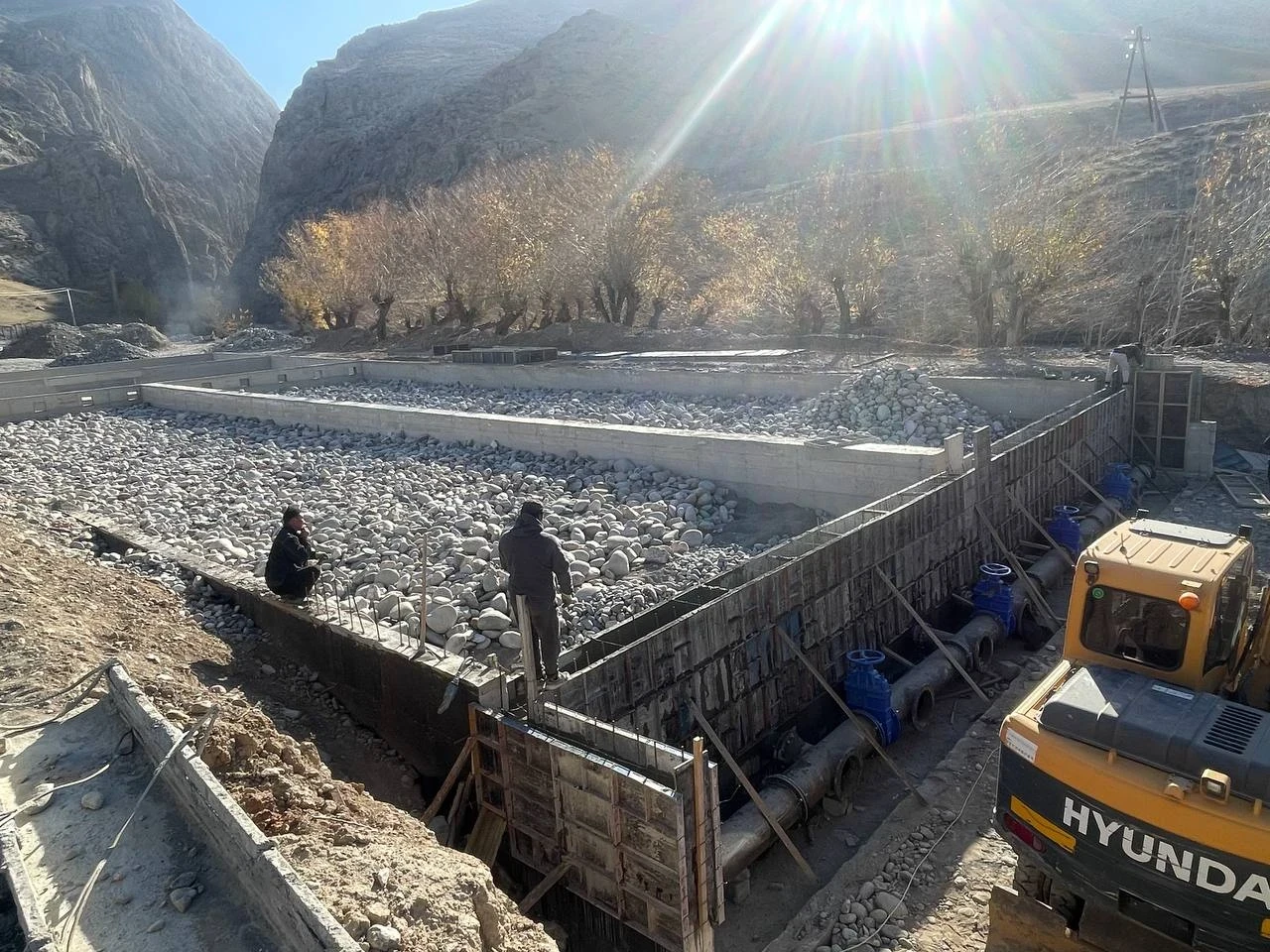
Photo from the press service of the Ministry of Water Management and Agriculture. Construction of a water supply system in the Leilek district of the Batken region
Authorities plan to address the issue within the framework of a program for 2026–2036, funded from the republican budget and international sources.
However, even new systems often fall into disrepair due to a lack of funds and weak institutional resilience of local organizations. It creates a vicious circle: the state builds new facilities, but due to insufficient funding, they gradually become unusable.
Future of the Bill
According to Azamat Shadmanov, the bill will be revised with deputies and presented for discussion again after explanatory work with the population.
However, even this law will not fully solve the problem. The population will still pay only part of the actual cost of water, and the remaining amount will be covered by subsidies. The main question is whether people's attitude towards paying for water will change over time.
The department director noted that certain changes are already taking place.
People are beginning to realize the value of water, but this process takes time.
Azamat Shadmanov
He believes that one solution could be the installation of water meters, which is gradually being implemented within the framework of international and republican projects. Additionally, municipal enterprises should more actively apply measures against non-payers.
“There are various mechanisms, including temporary water disconnection until the debt is paid. We cannot allow some to pay while others do not,” concluded Azamat Shadmanov.


