
Have you noticed how the prices of fruits and vegetables are rising, while the usual seasonal decrease has become less noticeable? The reasons for this are not only inflation and logistical problems but also climate change. We tried to understand how this impact affects prices by analyzing the situation from glacier melting to the market shelf.
The Decline of Canals: Drip Irrigation as a Necessity
What does traditional irrigation look like? Water flowing from mountain glaciers rushes powerfully to the fields through rivers and canals.
Now imagine a different picture. Almost invisible black pipes that carefully distribute water drop by drop directly to the roots of plants, ensuring economical use.
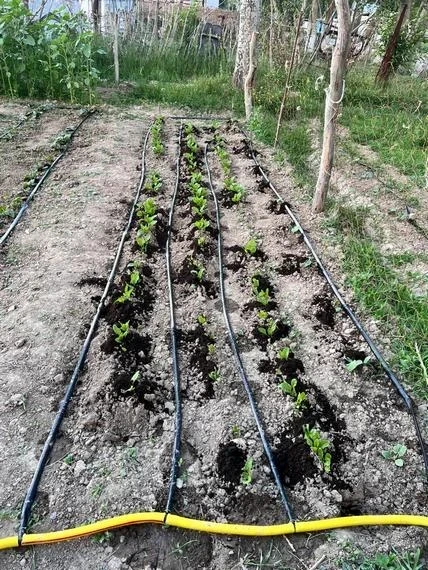
These two approaches are a vivid example of how climate change has affected agriculture. Previously, canals symbolized abundance, while now drip irrigation has become a sign of fear and the need for additional costs. Farmers transitioning to new irrigation technologies face extra expenses, but we all pay for it.
Farmers of Chui Region: Dreams of Their Own Wells
In the west of Chui region, we see a contrast between traditional and modern approaches. In the village of Panfilov, there are two plots: one grows raspberries with drip irrigation, while the other has an apple orchard with traditional irrigation.
The owner of the apple orchard, Kumush-apa, says that each year the problem with irrigation water becomes more pressing, and they are considering drilling a well.
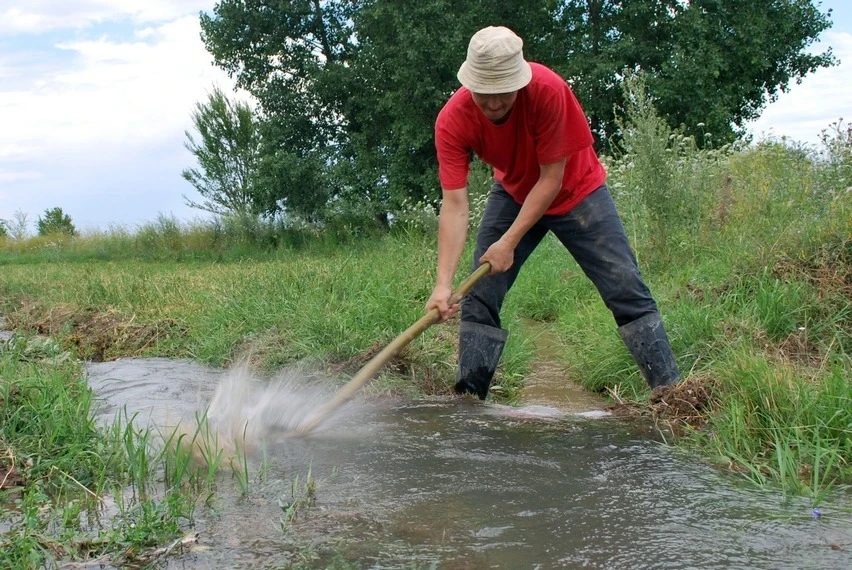
During the irrigation season, people have to queue for water in advance. Kumush-apa's son shares that he goes to the upper canal early in the morning to meet the murab and clear the channel of debris. While they water the orchard, neighbors eagerly wait for their turn, which sometimes leads to disputes over the lack of water.
“The winter was low in snow, and I fear there will not be enough water. Drilling a well will cost 50-70 thousand soms. I don’t understand how in a country with such water resources we are facing shortages,” she shares.
The Paradox of Water Supply: More Water with the Same Areas
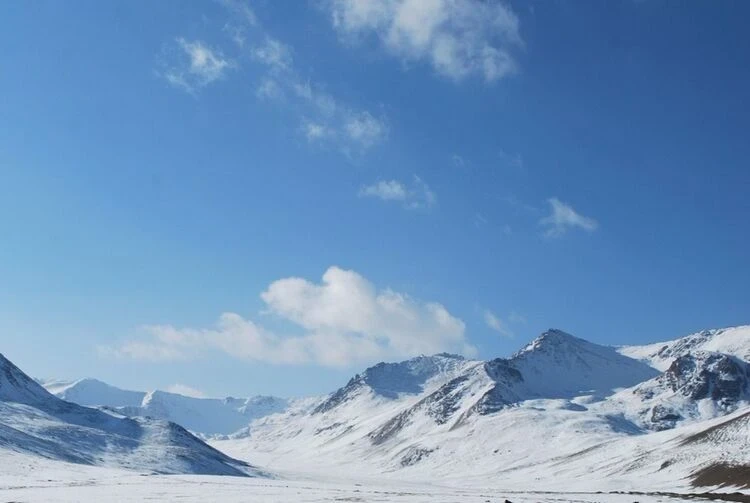
Kyrgyzstan has extensive water resources: there are 1,923 lakes and more than 3,500 rivers on its territory. However, each year, the glaciers that provide up to 80% of the runoff are shrinking. Over the past decades, their volume has decreased by 30%, which especially complicates irrigation agriculture.
Since the beginning of the 20th century, the average annual temperature in Kyrgyzstan has increased by 1.6 degrees. Over the past 46 years, this figure has doubled — the increase is 0.022 degrees per year.
By the years 2050-2060, the average temperature in the country may rise by 4.5 degrees.
Water usage statistics show that the area of irrigated land from 2018 to 2022 has hardly changed. For example, in 2018 it was 1,024.7 thousand hectares, and in 2023 it was 1,024.8 thousand hectares.
Table. Water Use for Irrigation and Agricultural Water Supply
2018
2019
2020
2021
2022
4817
4920.7
4942
4986.9
5515.6
In 2022, the volume of water used for irrigation increased by 14.5% compared to 2018, although the area of irrigated land remained the same. Losses amount to 2.4 billion cubic meters, which is 27% of the total volume of withdrawn water. This is due to evaporation under the sun.
Duyshonkul Rysbaev, head of the sector for implementing water-saving technologies, notes that the state is committed to restoring major canals and water collectors.
“Drip and sprinkler irrigation are being implemented on state fields. Additionally, private farms can receive equipment if they unite into cooperatives with a total area of at least 10 hectares. 20% of the profit from the sale of the harvest must be returned to the district water management authorities,” Rysbaev says.
Survival of Small Farms in Conditions of Water Shortage
The main problem is that small and medium-sized farms dominate in the country. The cost of installing drip irrigation varies depending on many factors, including the size of the plot and the type of crops.
For a small plot (20-50 acres), prices start from 30 thousand soms. The smaller the farm, the higher the costs for equipment.
Large farms work with processors, giving them an advantage. For example, the “Eko Urozhay” farm delivered a record harvest of tomatoes (1,200 centners) for processing, saving time and resources on sales.
Farmers with smaller harvest volumes find the purchase price from processors unprofitable.
Mukhtar Chynaliyev, director of the Department of Processing Industry, states that in the republic, processing accounts for only 7% of the total harvest, and a phased increase of this figure is planned to enhance competition.
How We Pay for Climate Change
Small and medium-sized enterprises engaged in processing agricultural products also face the consequences of climate change. Rakhmat Abylgazieva, head of the “Samida” enterprise, notes that they are forced to accept prices set by farmers.
Farmers include additional costs for the installation of new irrigation technologies in the price of their products.
Rakhmat Abylgazieva
The “Tunuk” enterprise produces products from fruits and herbs. Ulana Nurgazy uulu, its manager, talks about problems related to weather conditions.
“In 2025, due to bad weather conditions, the plum harvest decreased, and we had to buy plums at twice the usual price. We are completely dependent on farmers,” he shares.
Janara Algazhoeva, a partner at “Tunuk,” collects and grows medicinal herbs. She says that climate conditions affect their business.
“Due to drought or rain, the herbs may not sprout or rot. Installing drip irrigation is a necessity. Farmers bear the costs of equipment and cannot operate at a loss,” she emphasizes.
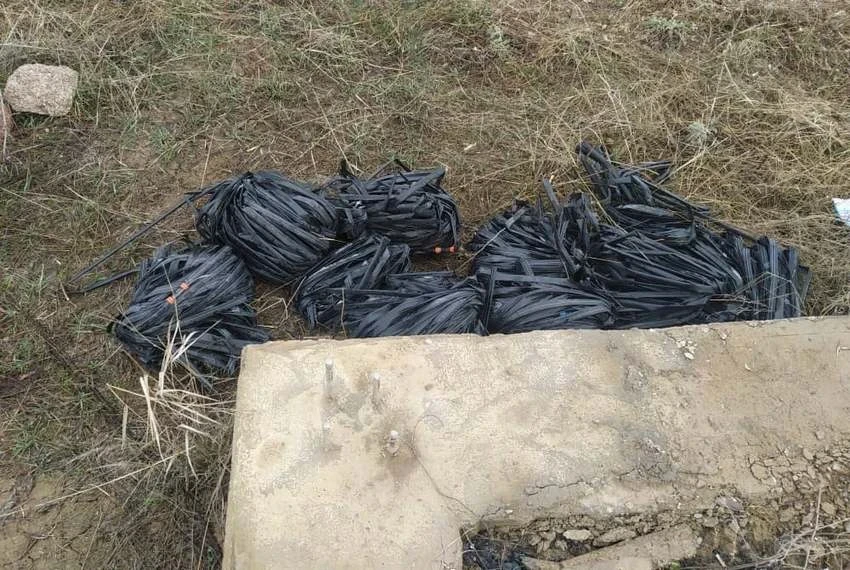
Climate change creates a chain of expenses: farmers raise prices on their harvest to cover their additional costs, processors and traders add their markups. By purchasing products, we, as consumers, pay for the consequences of glacier melting and reduced snow mass.


