
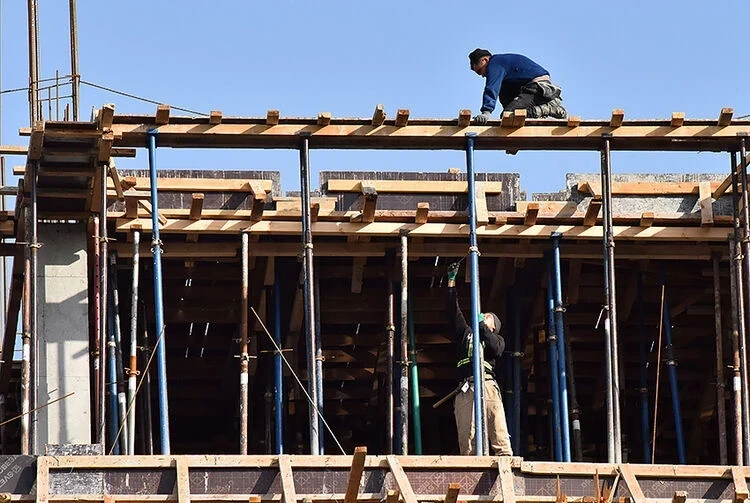
Journalists from 24.kg conducted an analysis of current prices for building materials in Kyrgyzstan and identified the factors influencing them. The main factors determining the cost are seasonality, import supplies, and the development of local production, which in turn shapes the modern construction market.
Prices have skyrocketed: which categories of materials have increased the most
Seasonal fluctuations have a significant impact on prices in Kyrgyzstan, which can change by 8–10 percent throughout the year. Over the past 4–5 years, some items have increased in cost by 100 percent. The most noticeable increase is observed in dry building mixtures, such as plasters, putties, gypsum mixtures, paints, and primers.
Finishing materials, including doors, windows, linoleum, and laminate, have risen in price more moderately. On average, the cost of cement and other materials has increased by 20–30 percent, with the economy class seeing an increase of 10–20 percent, while the premium segment has increased by 30–40 percent.
Prices for rebar and cement have risen by 40–50 percent in recent years, with the increase depending on the country of origin: imported products, mainly from Russia, or local production. The trend of rising prices remains stable, although there is unevenness in the changes.
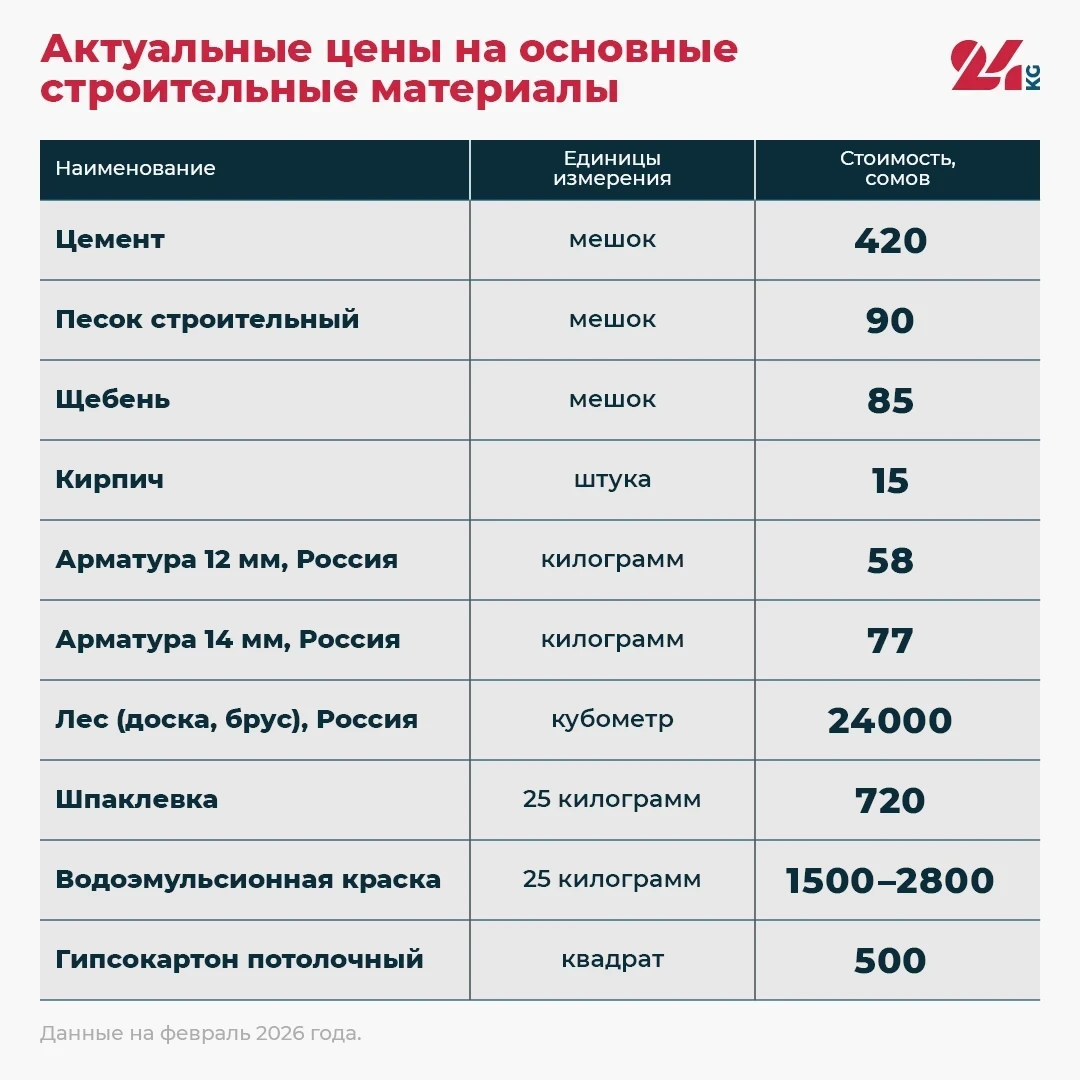
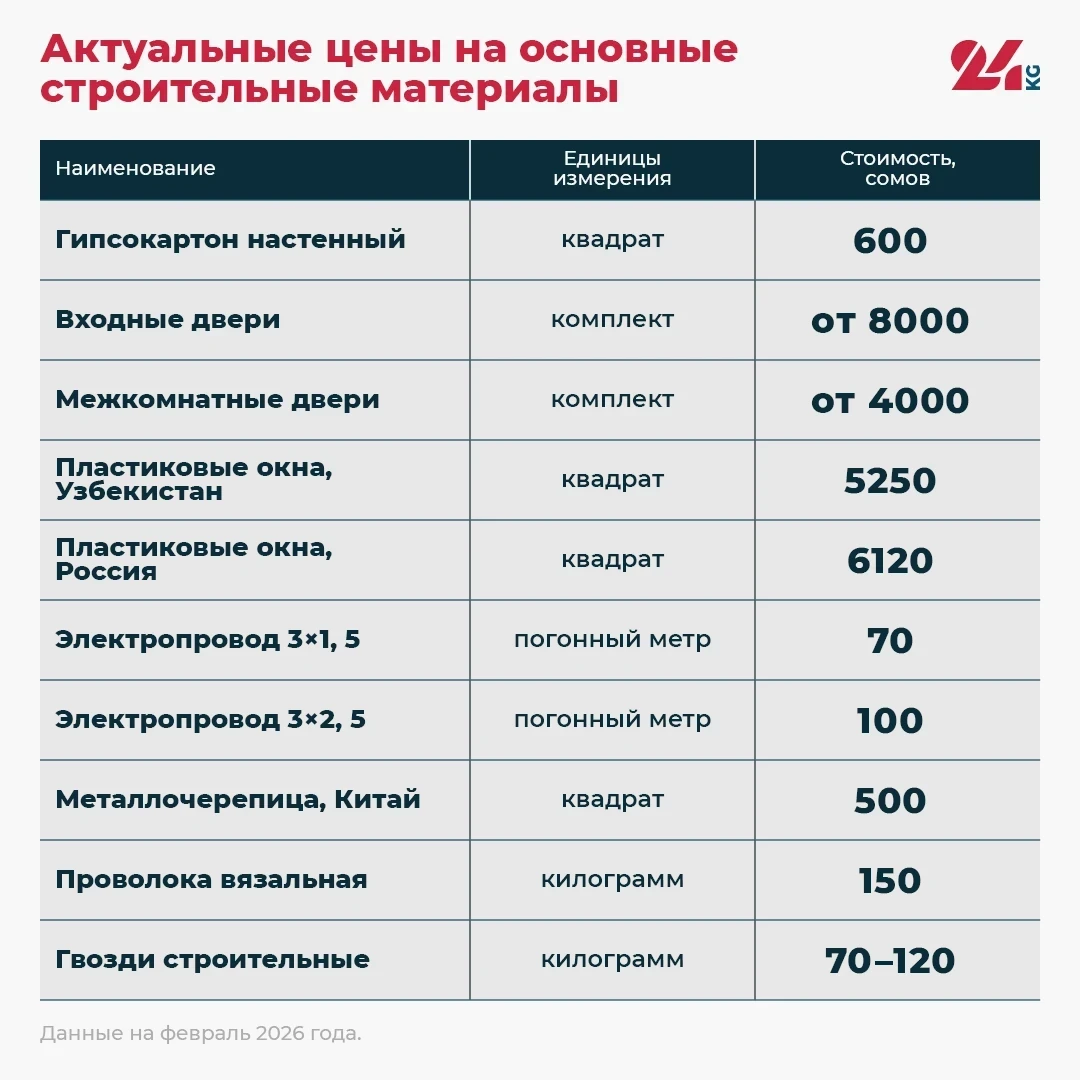
The sharpest price jumps have affected imported dry building mixtures supplied from Russia, Kazakhstan, Uzbekistan, and other countries, where the increase has reached 70-100 percent or more.
In Kyrgyzstan, local production of building mixtures is actively developing, which have also increased in price, but to a lesser extent, and demonstrate a good price-to-quality ratio.
Local mixtures are becoming increasingly popular in several regions, both in the economy and premium segments. In terms of quality, they are already capable of competing with more expensive imported analogs, including Kazakh mixtures, which have traditionally been known for their high quality due to European additives, but have risen in price due to increased raw material costs.
Where local producers compete with foreign brands
The market for building materials in Kyrgyzstan is gradually reducing its dependence on imports, as local producers have started to manufacture door and window blocks, profiles, as well as various types of equipment and components.
However, despite the aspiration for high quality, dependence on supplies from Russia remains, especially in the field of engineering communications, such as sewage and water pipes, fittings, and other technical elements. Russian products are still considered more reliable, although they have increased in price by 50–60 percent.
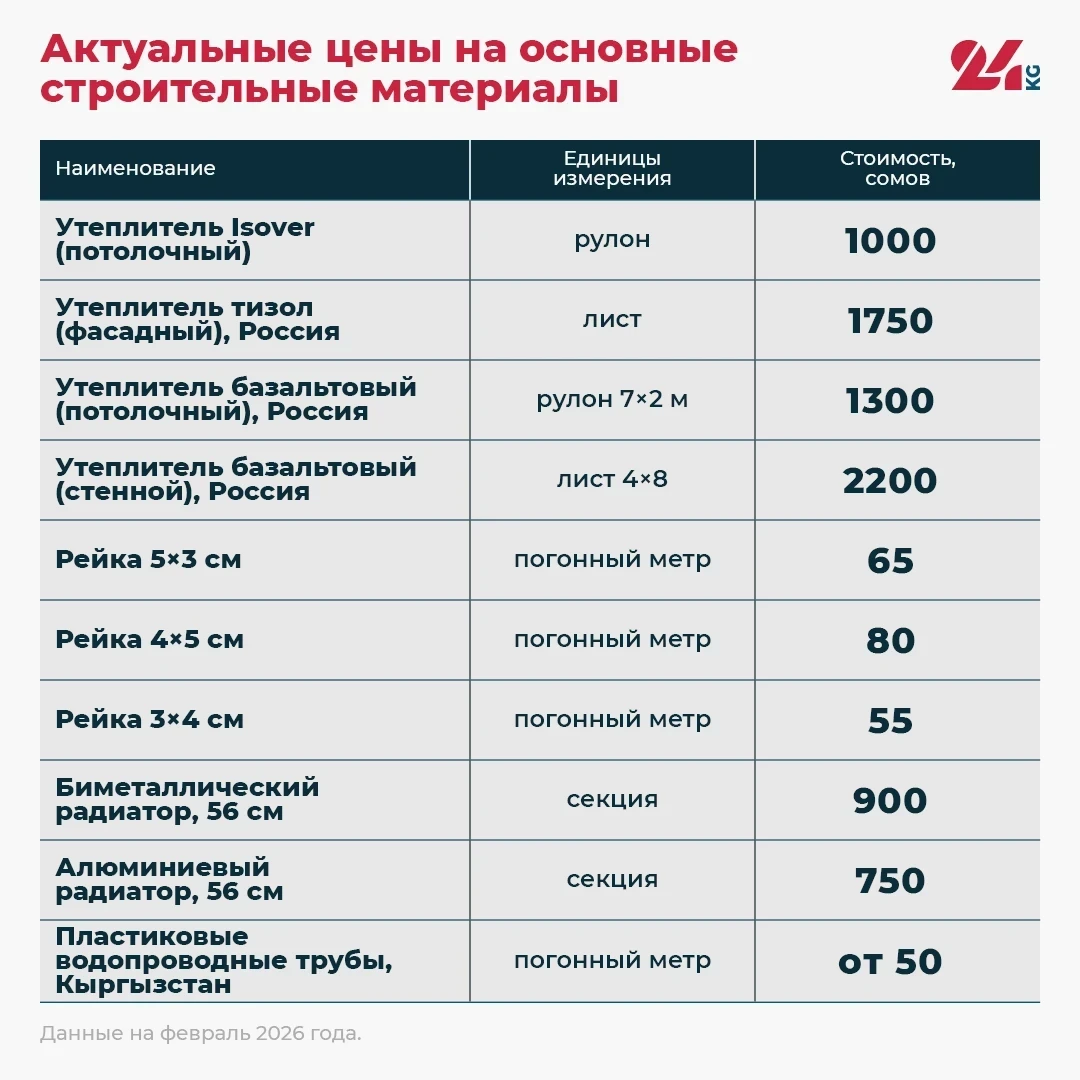
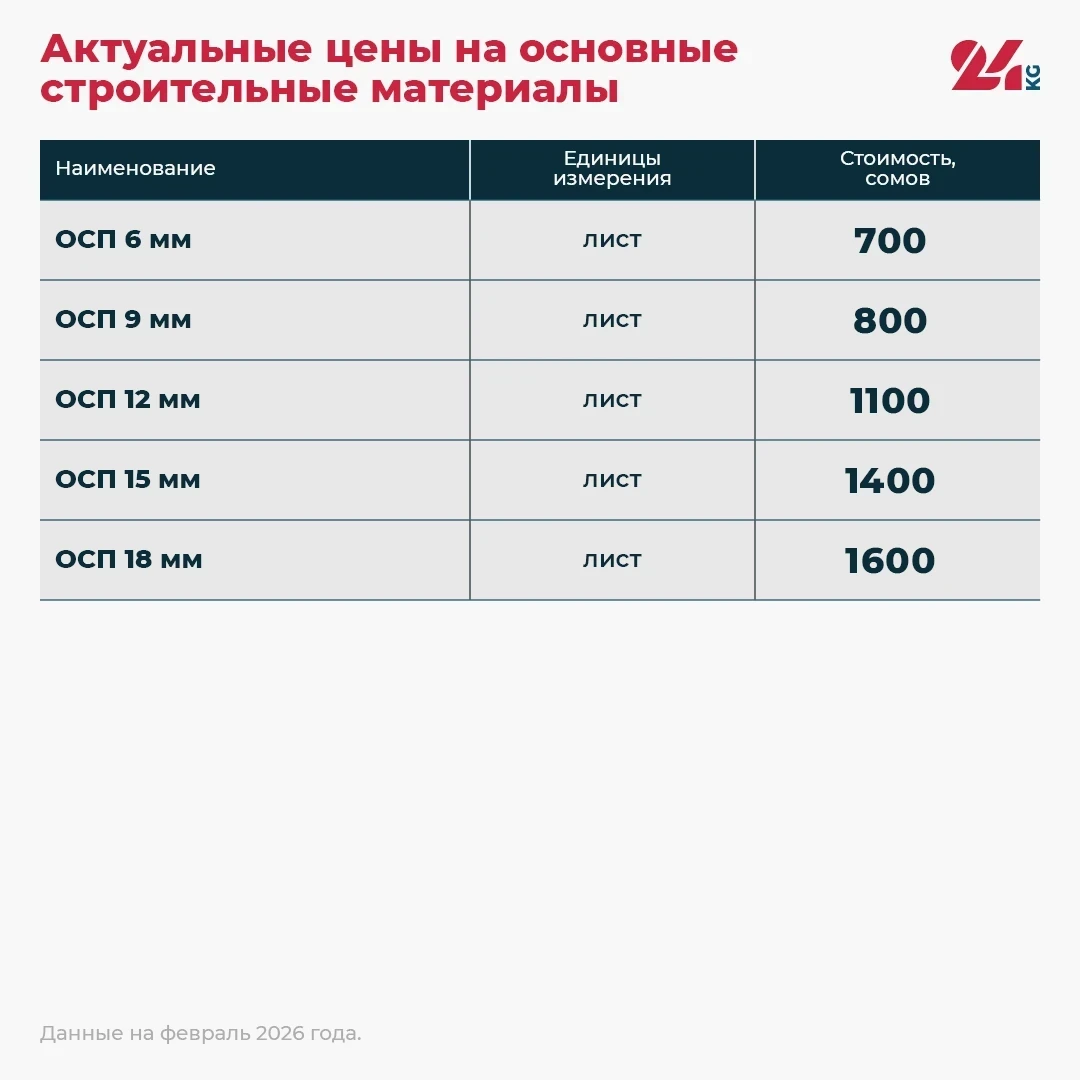
Local companies produce a variety of doors — wooden, MDF, veneered, and others. Nevertheless, it is still not possible to fully supply the market through domestic production, which maintains dependence on imports.
Why we continue to import pipes and laminate
Kyrgyzstan lacks its own production of laminate and engineered wood.
However, ceramic tiles are available on the market, including from Russia and Belarus, which are known for their good quality. In some cases, imported tiles, despite logistics and customs costs, can be cheaper than local ones, thanks to economies of scale and a more flexible pricing policy.
As for engineering networks, locally produced pipes and fittings sometimes fall short in quality compared to imported analogs. Russian brands in this segment continue to lead, despite rising prices.
Plumbing and choice: how China competes with local production
The segment of cables, fiber optics, and related equipment remains one of the most dependent on imports. Major supplies come from Russia and partially from China. Products from China offer an acceptable price-to-quality ratio. However, key items such as electrical equipment, pumping stations, pumps, and technical systems are mainly imported from Russia.
Nevertheless, positive changes have occurred in the market over the past 3–5 years.
Previously, plumbing, bathroom furniture, sinks, and sanitary appliances were almost entirely imported, but now there is active development of local producers who successfully compete with foreign products in terms of price and quality, and in some segments reach premium class levels.
The impact of the ruble and logistics on price formation
Changes in the ruble exchange rate have a limited impact on prices for building materials in Kyrgyzstan. The volatility of the ruble is low, and fluctuations of a few kopecks do not create a significant effect.
Prices are more strongly influenced by rising logistics costs, tax burdens, increases in VAT from suppliers, rising transportation costs, and wage growth. It is these factors combined that form the final cost of products.
How to save up to 30 percent and avoid shortages
The construction industry has a "dead season" — January, February, and early March. During this time, producers and importers conduct sales of leftover old collections of doors, ceramics, porcelain stoneware, tiles, and other finishing materials, preparing for the arrival of new lines. Discounts during this period can reach 20–30 percent or more.
This is the optimal time to purchase building mixtures, components, and essential materials. At the same time, producers do not incur losses — the promotions are aimed at maintaining turnover and freeing up warehouses.
During peak construction seasons, especially when implementing large infrastructure projects such as microhydroelectric plants, mini-hydroelectric plants, roads, tunnels, bridges, and residential complexes, there is often a shortage of cement and rebar in the market. At such times, prices can increase by 20–30 percent.
Therefore, private builders are advised to purchase cement, rebar, and bricks in advance, ensuring proper storage conditions.
Finishing materials such as doors, wallpaper, tiles, and baseboards should not be purchased in advance due to the risk of damage and loss of relevance. Roofing materials and profiled sheets, a significant portion of which is imported from China, are usually available in sufficient quantities on the market, but are also not suitable for long-term storage.
Over the past 4–5 years, the market for building materials in Kyrgyzstan has changed significantly. The highest price growth is observed in imported dry mixtures, while local producers have managed to keep their prices at a more moderate level. Gradually, the market is shifting towards local production, reducing dependence on imports and creating a more sustainable pricing model.


