
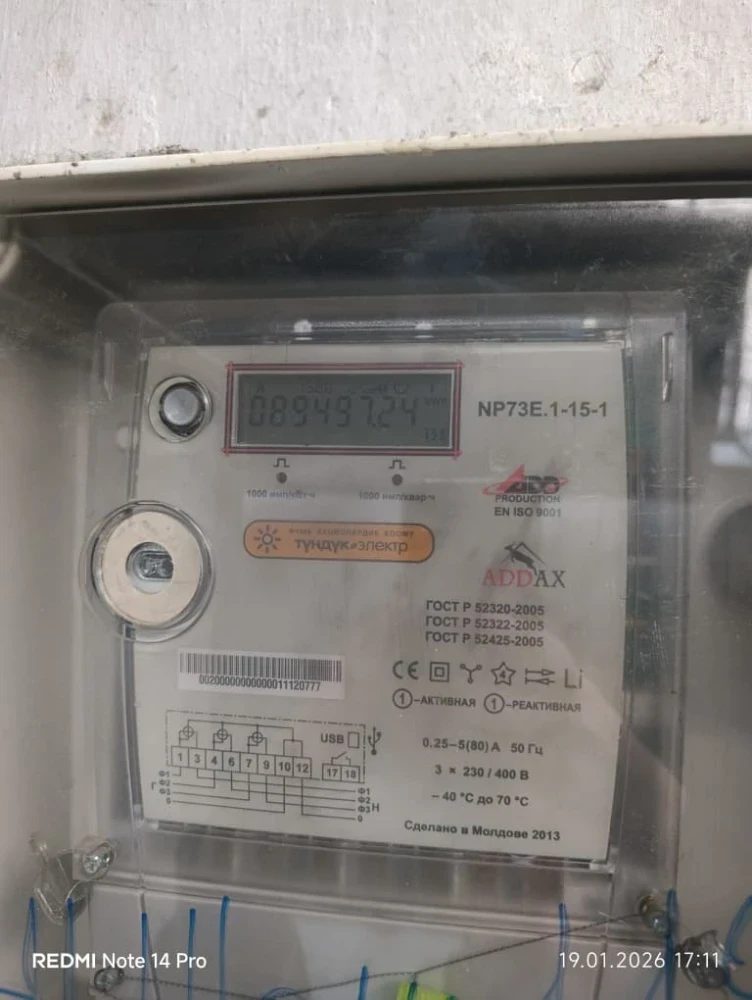
Currently, the situation remains challenging: energy companies continue to operate under strict restrictions, accompanied by complaints about malfunctions in meter readings. In cities, this is less noticeable; however, in the regions, the stringent energy-saving measures are felt much more acutely.
Kaktus.media conducted a survey to find out how energy workers and residents of the country assess the current state of affairs.
Increase in Consumption
According to information from the Open Joint Stock Company "National Electric Network of Kyrgyzstan," electricity consumption in the country continues to grow, linked to both an increase in the number of users and seasonal factors. Nevertheless, overall consumption remains within the calculated values set during the planning of the energy system's operation.During the reporting period, 15.4 billion kWh of electricity was generated, of which:
- 12.9 billion kWh - from large hydropower plants;
- 0.223 billion kWh - from small hydropower plants;
- 0.234 billion kWh - from mini-hydropower plants and renewable energy sources (solar and wind power plants);
- 2.01 billion kWh - from thermal power plants.
Compliance with Limits
Thanks to strict adherence to limits, electricity consumption remains within calculated indicators. For instance, this season, the capacity of electric meters was reduced by half."We monitor the established limits, conduct constant load monitoring, and manage the operating modes of the energy system, which helps minimize instances of exceeding threshold values," representatives from the Open Joint Stock Company "NESC" reported.
According to the results for the period from April to December 2025, there was an excess of the established electricity consumption limit by 365.2 million kWh, which constitutes 3.98% of the total volume.The Open Joint Stock Company "NESC" collaborates with representatives of the president in the regions and the mayors of Bishkek and Osh for stricter compliance with limits.
"These measures are aimed at reducing peak demand, which contributes to the reliable operation of the energy system under maximum loads. As a result of implementing these restrictions, we achieved a 10% reduction in electricity consumption compared to planned indicators," the energy workers shared.
The situation in practice does not look as rosy. Here are some comments from residents of the regions:
- We have stove heating. We cook on the stove or gas burner, and we do not use powerful electrical appliances. But even those we have do not always work, as during peak hours the power is reduced so much that energy-saving bulbs start flickering and refrigerators hum. Energy needs to be saved, but whether household appliances can withstand such a regime is a big question.
- We live in a private house with a three-phase connection and a smart meter. This winter is just terrible. I turn on the kettle to boil water and am even afraid to charge my phone so that the power doesn’t go out. If we cook on the electric stove, we turn off everything else. The lights are only on in a couple of rooms. When will this end?
- We return from work after 6:00 PM, and that’s when the power drops significantly. You don’t know what to do: turn on the washing machine, the kettle, or cook dinner. It’s impossible to combine even two procedures. It’s incredibly inconvenient.
Such restrictions apply not only to meter capacities. Regulatory measures remain relevant even in winter.
"Planned power outages are carried out with prior notification to consumers. Unplanned outages and voltage fluctuations may occur due to accidents in electrical networks and cannot always be predicted," the Open Joint Stock Company "NESC" reported.
Issues with Smart Meters
This year, residents faced another problem – incorrect operation of the meters. At the end of January, users noticed that their electricity bills were higher than in December."My electricity bill in the 'My Light' app was 9,077 soms. We have gas heating, so we did not expect such an increase. The meter readings did not match the bill. We contacted the inspector, recalculated, and explained that in the cold, the meter might not work correctly. Many on our street received incorrect bills. If we hadn’t looked into it, we would have just paid. Why wasn’t there a warning to people about possible malfunctions in the cold?" shared a Kaktus.media reader.
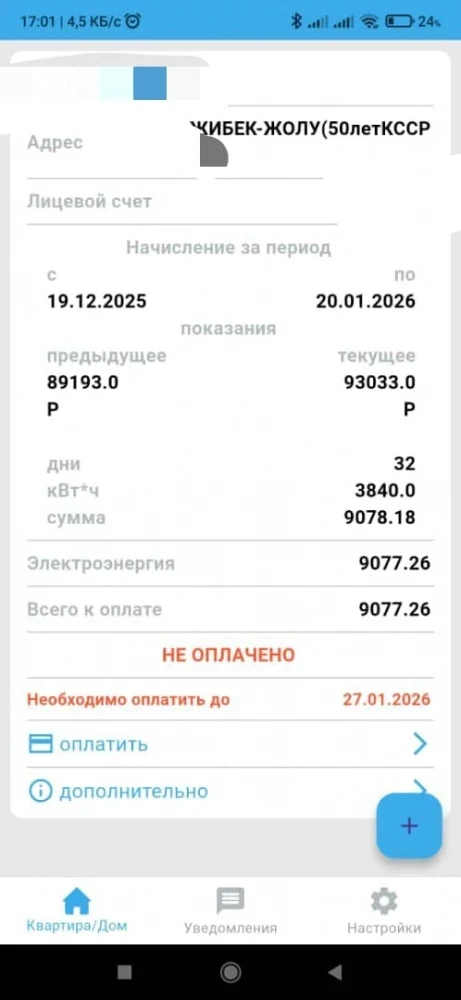
In the Open Joint Stock Company "NESC," it was explained that smart meters (automated commercial accounting systems) are certified and designed to operate in low-temperature conditions. Low temperatures do not affect their accuracy. However, malfunctions may occur.
The increase in billing amounts in winter is usually related to a real increase in electricity consumption due to the use of electric heating devices and their duration of operation."In some cases, temporary technical failures may lead to billing based on average monthly consumption with subsequent adjustments. This can create the impression of a sharp increase in charges. According to the results of inspections, no mass cases of incorrect operation of smart meters have been recorded," summarized the "National Electric Network."
In Conclusion
One should not think that all the difficulties of winter are behind us. In mid-January, the government reported that the water level in the Toktogul reservoir had dropped to just over 9 billion cubic meters, which is 1.6 billion cubic meters less than last year.What does this mean for ordinary citizens? Energy workers will do everything possible to preserve Toktogul, as it is the backbone of the country's energy system. Therefore, control over compliance with limits will become even stricter. Our hope is for good weather, precipitation, and the gradual filling of the Toktogul reservoir.


