
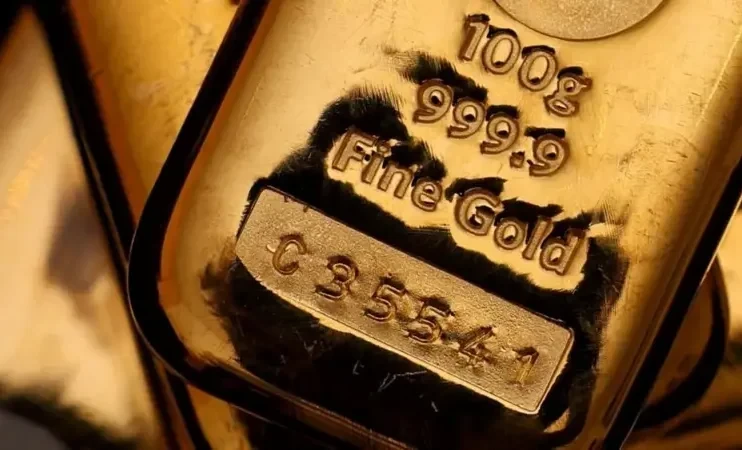
The market price of gold has reached a new historical high, exceeding $5,000 per ounce. This increase, which began in 2025, has exceeded 60%, according to the BBC.
The reason for this change has been the escalating tensions between the USA and NATO regarding Greenland, which has raised concerns about financial and geopolitical stability.
The situation in the market is also complicated by the trade policy of the administration of US President Donald Trump. Last Saturday, he threatened to impose 100% tariffs on Canadian goods if a trade agreement with China is signed.
Precious metals, including gold, are considered safe assets during periods of economic uncertainty, as evidenced by the recent rise in silver prices, which has surpassed $100 per ounce for the first time, increasing by nearly 150% last year.
The growing interest in precious metals is attributed to several factors: high inflation, a weakening dollar, purchases by central banks around the world, and the expected reduction in interest rates by the US Federal Reserve this year.
Conflicts in Ukraine and Gaza, as well as Washington's actions to overthrow Venezuelan President Nicolás Maduro, have also contributed to the increase in gold prices.
According to the US Geological Survey, another 64,000 tons of gold could be extracted from underground reserves, although a stabilization of the supply of this metal is expected in the coming years.
Nicolas Frappell from ABC Refinery noted: “Gold is not tied to the debts of others, like bonds or stocks, which depend on the success of companies.”
“It is truly an excellent tool for diversification in times of rising uncertainty,” he added.
The year 2025 has been record-breaking for gold, as it has shown the largest annual growth since 1979, when investors began to invest heavily in precious metals.
Financial markets are experiencing fear in light of Trump's threats regarding tariffs and the overvaluation of stocks in the artificial intelligence sector, which has repeatedly driven gold prices to new records.
“The main reason for this is the high uncertainty in US policy,” claims Nikos Kavlis from the consulting firm Metals Focus.


