

Since 2021, the World Bank has been conducting a study titled "Listening to the Kyrgyz Republic," which is based on regular telephone surveys. It reveals an interesting paradox: despite the stable improvement of macroeconomic indicators, the residents of Kyrgyzstan do not feel equally positive changes in their well-being.
The document covers the time period from 2022 to the third quarter of 2025, allowing for a comparison of overall economic trends with the personal feelings of citizens.
The study identifies several significant conclusions.
GDP Growth and Poverty Reduction: Numbers vs. Reality
According to the data obtained, from 2021 to 2024, GDP per capita increased by 23 percent, and the national poverty rate decreased from 29.8 to 25.7 percent, meaning that about 264 thousand people were able to escape poverty.
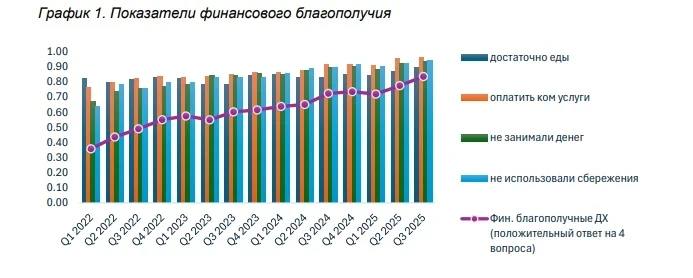
These changes in the macroeconomy contributed to the improvement of families' financial stability: as of the third quarter of last year, about 90 percent of households could afford food and pay for utilities, and the overall financial stability index rose from 35 percent at the beginning of 2022 to 80 percent by 2025.
Inflation Trap: Decrease in Family Savings
However, by 2025, the growth of real incomes virtually ceased. The study records their stagnation due to inflation and a significant reduction in the share of remittances—from 19 percent in 2022 to only 6 percent by the third quarter of 2025.
This negatively affected families' ability to save: if a year ago 11 percent of households were saving money, by 2025 this figure dropped to 1 percent.
Thus, it explains why citizens do not always feel economic growth: current expenses consume all possible savings.
Price Pressure: Main Concerns of Kyrgyz Citizens
By the third quarter of last year, food security reached 85 percent—significantly better compared to 2022 when many families had to skip meals.
Nevertheless, the fear of rising prices has intensified again. The inflation perception index in 2025 returned to positive territory, indicating that people are once again feeling price pressure after the calmer years of 2023-2024.

Most concerning to people is the rise in prices for bread, flour, meat, and especially electricity tariffs, which reached a three-year high by mid-2025.
Migration Fades into the Past: Growing Trust in Reforms
An interesting finding of the study is that the desire to migrate among respondents has almost disappeared.
If at the beginning of 2022, 12 percent of households planned to migrate, by mid-2025 this figure had nearly reached zero.
The main reasons for this include:
- improved assessment of economic conditions (93 percent give a positive assessment);
- increased optimism regarding reforms (up to 90 percent by the third quarter of last year);
- improved perception of job market opportunities (up to 75 percent positive responses).
Main Factors Influencing the Sense of Well-Being
The study identifies several key factors that shape the emotional and material well-being of Kyrgyz citizens:
1. Loss of Food Security
This leads to a significant and prolonged decrease in life satisfaction—about 8 percent without quick recovery. If a family faces food shortages, the negative perception persists for a long time.
2. Subjective Poverty
When a family begins to consider itself "poor," life satisfaction decreases by 5 percent and remains below the initial level for two years.
3. Unemployment
Starting employment is one of the strongest factors for increasing life satisfaction. A year after employment, this indicator increases by 8-9 percent, and after two years—by almost 17 percent.
4. Increase in Income
An increase in income by 20 percent leads to a 10 percent increase in life satisfaction, by 40 percent—13 percent or more. The maximum effect is observed with an income increase of 60 percent or more.
Trust in Government as a Factor of Well-Being
An interesting fact from the study: the increase in trust in the government has a direct correlation with the rise in life satisfaction among citizens.
The share of those who consider anti-corruption measures effective rose from 73 percent at the beginning of 2022 to 92 percent by the third quarter of 2025.
The perception of "open dialogue between authorities and the population" increased from 61 to 81 percent over the same period.
This effect is stable, indicating that communication and transparency are nearly as important to people as income and employment.
What This Means
The study highlights a dual reality:
- The economy of Kyrgyzstan demonstrates dynamic growth, incomes are increasing, and the poverty level is decreasing;
- However, the sense of financial vulnerability remains high, especially against the backdrop of stagnating real incomes and growing concerns about prices.
The main risks for households include job loss, rising prices, and fear of declining living standards. Key factors for resilience are considered to be employment, financial security, stable incomes, and trust in ongoing reforms.


