
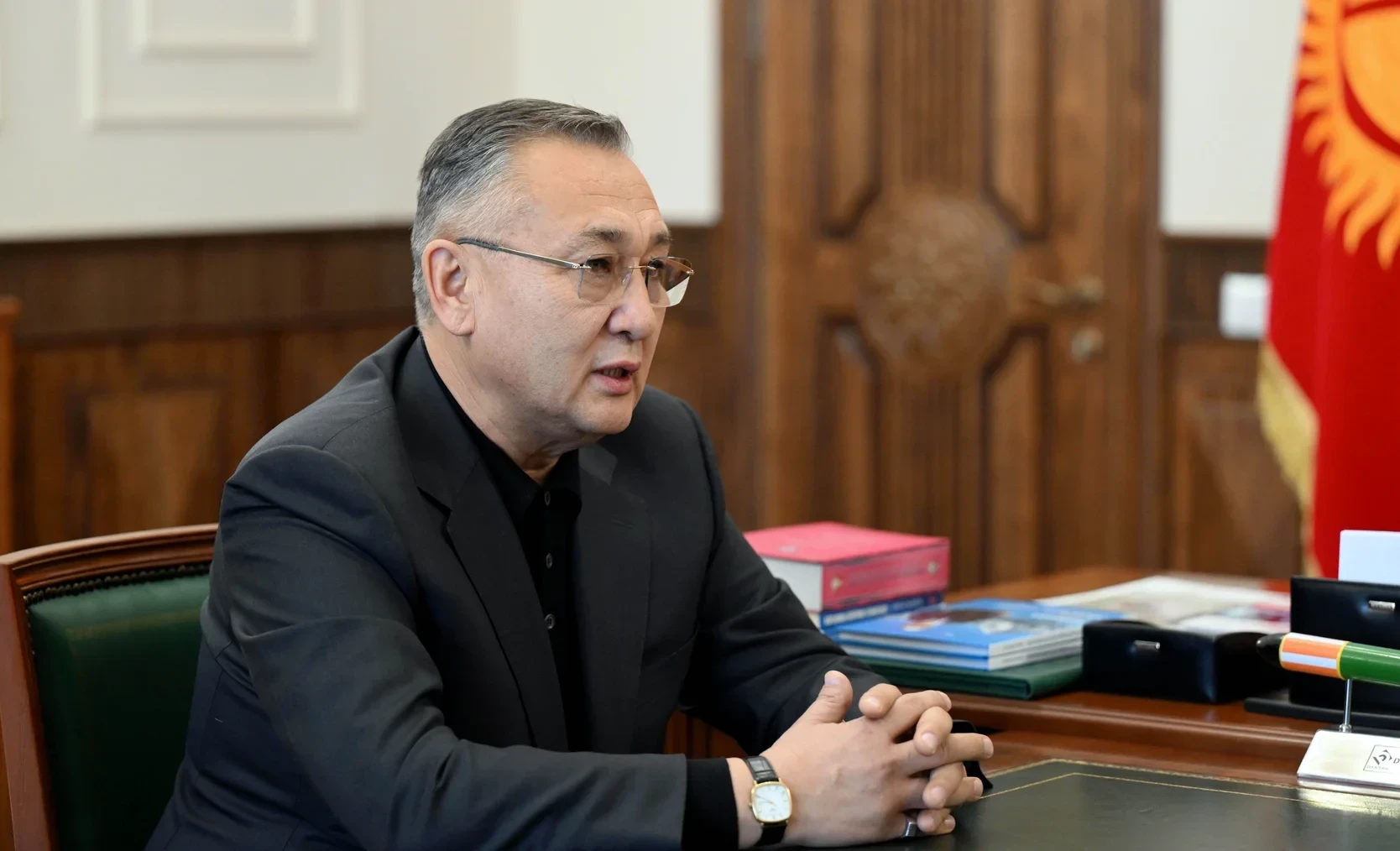
Talatbek Masadikov, the new Secretary General of the Collective Security Treaty Organization (CSTO), gave his first significant interview to the information and analytical publication "CSTO Allies." In the conversation, he covered a wide range of issues related to regional and Eurasian stability, as well as enhancing the effectiveness of collective rapid response forces and modernizing armaments.
Masadikov emphasized that Russia is currently presiding over the CSTO, and at the level of heads of state, the organization's course has already been determined, and a plan for joint activities has been agreed upon. He also outlined the key vector of interaction between partner states: "Collective security in a multipolar world. A unified goal – shared responsibility."
"Our main task is to effectively fulfill the mission of the Organization, which is to maintain peace and stability in the area of responsibility and to create conditions for the safe development and prosperity of CSTO member states. We have all the necessary tools for this," he noted.
The Secretary General also expressed the intention to make the most of the accumulated experience of the CSTO and proven practices of cooperation to address key issues of common security. Such issues include political consultations, the work of specialized groups, and conducting joint exercises and operations.
Among the allies' plans is the improvement of the functioning of the CSTO's statutory bodies, the activation of inter-parliamentary cooperation, and the development of the collective security system forces, taking into account the forecast of changes in the military-political situation. Attention is also drawn to the coordination of efforts to combat international terrorism, extremism, and the illegal trafficking of drugs and weapons.
"Currently, Eurasia is the geopolitical center of a new multipolar world. Events occurring here influence the international political and military situation, including the area of responsibility of our Organization," Masadikov added.
He also noted that the reasons for the current imbalance in international relations are well known.
Among the new threats that require serious attention, Masadikov highlighted the use of digital platforms and artificial intelligence to weaken or destabilize states.
"There are temptations to introduce new types of lethal technologies. Defense spending is reaching historic highs, military space activities are intensifying, and new autonomous systems are emerging. The internet is being used to impact internal political stability, which harms the economic, military, and other interests of sovereign countries," he said.
According to CSTO members, the growing threats in the biological sphere and international information security require coordinated actions.
Unfortunately, there is a lack of unity in the international community on these urgent issues, and there have been no successful attempts to create deterrent mechanisms regarding new dangerous technologies. Additionally, the threat of international terrorism and related challenges, including drug trafficking and the cross-border movement of militants, remains.
In this situation, the CSTO is focusing on preventive, political-diplomatic methods while simultaneously improving its capabilities to respond to crisis situations.
"Within the extended Collective Security Strategy until 2025, we intend to continue enhancing the combat potential of the CSTO collective forces, including by equipping them with modern reconnaissance systems and troop management automation means. We also plan to develop military personnel training programs considering new achievements in military science," he added.
A fundamental task remains the implementation of the intergovernmental Program to strengthen the Tajik-Afghan border, a decision made in Astana in November 2024.
Currently, the CSTO is helping to implement the first stage of this program, which includes clarifying the lists of armaments and equipment for the Border Troops of Tajikistan. Work is underway to identify suppliers and coordinate contracts," Masadikov noted.
Furthermore, the CSTO Secretariat is actively developing cooperation with the Shanghai Cooperation Organization (SCO) and the CIS. The Secretaries General of the three organizations signed a Roadmap for the development of cooperation until 2028. "We are confident that the implementation of this roadmap will create prerequisites for more active joint actions in the field of security. This year, a joint conference of the CSTO, CIS, and SCO is expected, dedicated to security issues in Central Asia and Afghanistan," he added.
Masadikov also emphasizes the importance of CSTO interaction with the UN within the regularly updated resolution of the General Assembly, focused on conflict prevention, peacekeeping, combating terrorism, and ensuring international information security.


