
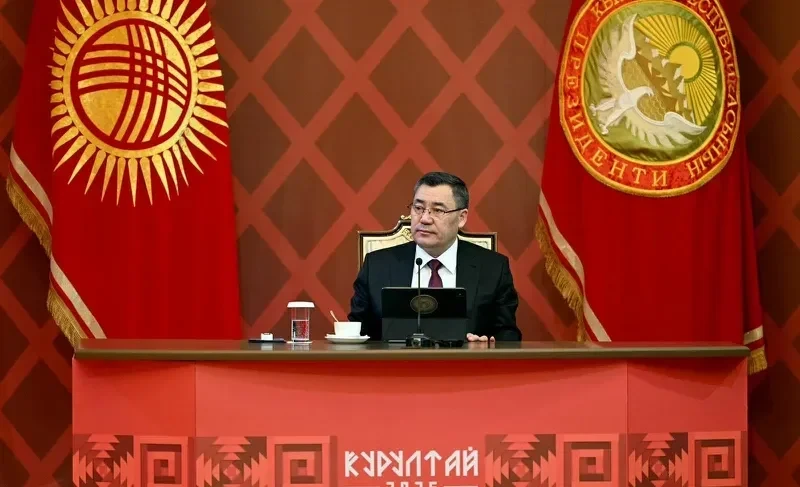
By 2025, Kyrgyzstan significantly improved its economic indicators compared to the crisis year of 2020. According to preliminary data, the country's gross domestic product reached 1.98 trillion soms, which is more than three times the level of 2020. The real GDP growth in 2025 was 11.1%, sharply contrasting with the steep decline observed at the beginning of the decade, placing the country among the leaders in economic growth dynamics in the region.
The construction sector became an important indicator of these changes. After a sharp decline in 2020, it began to grow confidently. In 2025, the gross output in this sector amounted to 438.5 billion soms, increasing by 21% compared to the previous year. This pertains not only to residential construction but also to roads, engineering infrastructure, social and energy facilities, indicating long-term capital investments.
Investments in fixed capital also showed positive dynamics. If in 2020 they fell sharply, by 2025 their volume exceeded 280 billion soms with double-digit growth. This indicates the formation of a full-fledged investment cycle, rather than a temporary increase.
Financial Stability: Gold and Reserves
One of the key factors in changing the macroeconomic situation was the increase in external reserves. Gross international reserves grew from approximately $3 billion in 2020 to over $7 billion by September 2025, and by the end of the year, they are projected to exceed $8 billion. For a small open economy, this means a new level of protection against external financial and trade shocks.
Gold played a significant role in this process. By 2025, gold reserves in Kyrgyzstan were estimated at 50-52 tons, which at market prices amounts to approximately $3.5–3.8 billion. The share of gold in the reserves reached about two-thirds, significantly enhancing the stability of the reserves amid currency fluctuations and geopolitical risks. However, such a structure would have been unthinkable at the beginning of the 2020s when the reserve base was less diversified.
Regional Stabilization as an Economic Factor
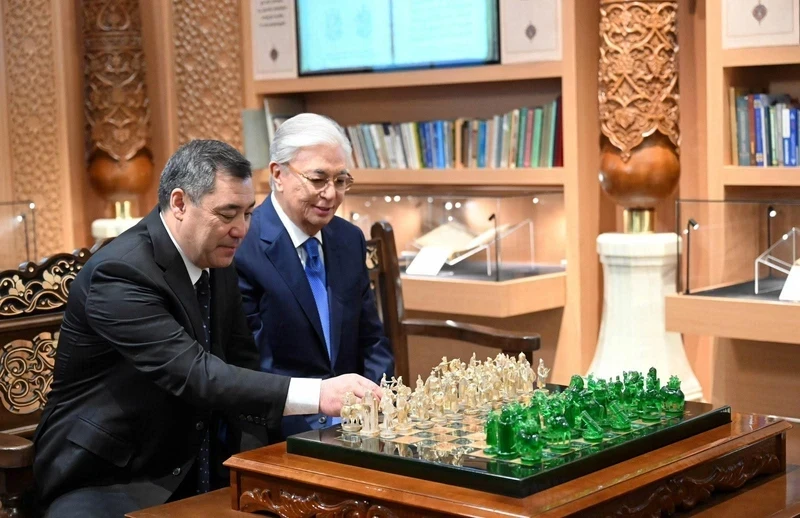
The economic changes were accompanied by an important diplomatic breakthrough. In 2025, Kyrgyzstan and Tajikistan signed an agreement on border delimitation, closing one of the most chronic sources of regional instability. This reduced the risk of conflicts in the southern regions, improved conditions for trade and logistics, and increased predictability for investors. Similar steps were taken with Uzbekistan.
This agreement signaled to external partners Kyrgyzstan's readiness to address complex issues through diplomatic channels rather than leaving them unresolved.
Kyrgyzstan in a Changing World: Connectivity and Energy
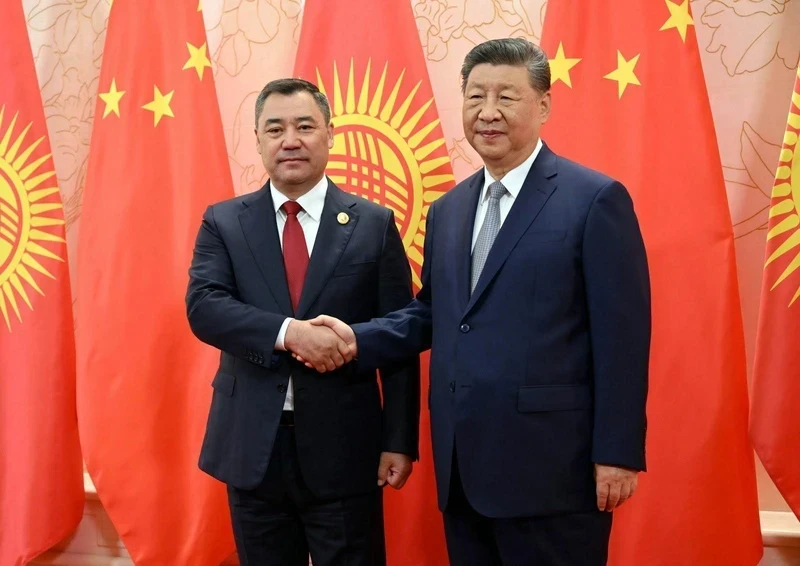
The five-year term of Japarov coincided with global changes in trade and logistics chains. Central Asia began to be viewed not as a peripheral region but as an important connectivity space. Kyrgyzstan is gradually integrating into this logic as a transit hub and participant in long-term energy projects.
What Lies Ahead
The five-year period demonstrates a sharp contrast. Kyrgyzstan experienced a downturn, investment inactivity, and uncertainty in 2020. In 2025–2026, it is characterized by double-digit GDP growth, large-scale construction projects, record reserves, and a significant contribution to regional stability.
However, the main challenge lies ahead. Much of what has been achieved was made possible by political will and centralized management. The future stage will show whether these achievements can be secured within institutional frameworks that will ensure revenue growth, investment sustainability, and predictability, regardless of political cycles.
Thus, the five-year presidency of Sadyr Japarov provides grounds for a cautious yet confident conclusion: the country, which many considered lost for long-term development in 2020, has managed to regain control over its trajectory. The question is whether this course can be maintained in the future.
The adoption of the Development Strategy of the Kyrgyz Republic until 2030 symbolizes a transition from crisis management to systematic planning. With consistent implementation of this strategy under current leadership, sustainable economic growth, strengthening of institutions, and investment activity can become not a temporary phenomenon but a stable trend. Given the current dynamics, Kyrgyzstan has every chance not only to maintain its positions but also to become one of the most dynamically developing and institutionally stable states, paving the way for long-term regional leadership.
The article published by the Georgian news agency was responded to by Kyrgyzstan's ambassador to France, Sadik Sher-Niyaz, who shared his thoughts with IA "Kabar":
“In diplomatic circles, we sometimes humorously discuss that we have a special relationship with our Georgian colleagues. I tell them that the Kyrgyz, Central Asians, defended Moscow during World War II, and they respond: ‘But we, Georgians, raised the banner of Victory.’ They take pride in their mountains, to which I counter – genaцвале, those are not mountains; we call them hills. If you want to see real cliffs, come to Kyrgyzstan. So, despite the humor, there is a competitive spirit in our relations.
I was pleased that my colleague himself sent me a link to the article discussing Kyrgyzstan's successes in the economy and the fight against corruption.
I also want to note that recently Bloomberg, one of the most influential publications in the world, published an article comparing Kyrgyzstan to a tiger preparing to leap. This is of great significance for the country.
Such articles shape the country's image and create trust among investors. Accurate assessments of the region, where there is stability and security, contribute to an influx of business.
The articles currently being published in foreign media are based on deep analysis, and serious analysts have been monitoring the development of our economy for several years. Everyone understands that Kyrgyzstan is entering a new stage of development, and this is undoubtedly encouraging.
It is nice that such materials are also appearing in Georgia. They highlight our achievements and positive changes,” concluded Sadik Sher-Niyaz.


